Quick answer: Siblings of special needs kids often carry guilt, anxiety, and grief that goes unnoticed. They need one-on-one time, honest conversations, and permission to have their own feelings.
There is a specific kind of guilt that lives in the chest of every special needs parent. It is the guilt you feel when you look at your other child, the one who does not have a diagnosis, the one who learned to ask for less, and you realize how long it has been since they got your full attention.
Research from the American Academy of Pediatrics confirms that siblings are watching everything. They understand more than you think. And most of them love their sibling fiercely while also carrying feelings they do not know how to say out loud.
What Siblings of Special Needs Kids Often Feel
Guilt for being the easier kid. Guilt for sometimes resenting their sibling. Guilt for having feelings about how much family life has changed and then guilt for having that guilt.
Anxiety about the future. NIH research shows sibling anxiety often centers on who will take care of their sibling? Will they be expected to? What does their family look like in twenty years? These are questions children as young as seven are carrying in silence.
Pride. Deep, genuine, extraordinary pride in their sibling that does not always get named or celebrated. The sibling relationship when raising siblings of special needs kids is complicated and it is also often profoundly loving. Siblings Matter is written for the guilt as much as for the sibling, because the two are the same problem.
What the Research Says About Siblings of Special Needs Kids
Research from the Sibling Support Project at the Arc found that siblings of people with disabilities show higher rates of anxiety and depression but also significantly higher rates of empathy, tolerance, and social competence compared to their peers. (https://www.siblingsupport.org)
Both things are true. The hard part and the good part live in the same child. Your job is to support both.
What Siblings of Special Needs Kids Actually Need from You
They need to be told the truth about their sibling’s diagnosis in age-appropriate language. Leaving it unnamed does not protect them. It leaves them to fill in the blanks with their imagination, which is often worse.
They need permission to have hard feelings. When your neurotypical child says “I hate that everything is always about her,” that is not a sign they are a bad sibling. That is a sign they trust you enough to tell the truth. Honor that. If you are not sure how to start that conversation at your child’s age, we recommend Celebrating Differences: How to Teach Siblings about Special Needs, which walks through what to say at each stage.
They need one-on-one time that has nothing to do with their sibling’s needs. Even thirty minutes a week of undivided attention sends a message that they are a whole person, not just a supporting character in their sibling’s story.
They need to know what is not their responsibility. They are not caregivers. They are not backup parents. They are children.
Consider a Sibling Support Group
The Sibling Support Project runs SibShops, peer support programs for siblings of people with disabilities, in communities across the country. Connecting your child with other kids who get it can relieve an enormous amount of isolation.
Therapy is also worth considering, not because anything is wrong, but because processing this kind of childhood benefits from a dedicated space. Your neurotypical child deserves support too.
For the Guilty Parent Reading This
The fact that you are thinking about this at all means you are doing better than you think. Parents who do not see their neurotypical kids are not reading articles like this one at some late hour wondering if they are getting it right.
You cannot divide yourself equally. But you can make sure every child in your house knows they are seen. That matters more than equal time. It matters more than getting the balance perfect.
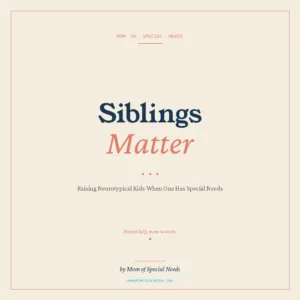
Siblings Matter: Raising Neurotypical Kids When One Child Has Special Needs
Sources and further reading
- Research from the American Academy of Pediatrics
- NIH research shows sibling anxiety often centers on
- Sibling Support Project website
The Hidden Grief of Growing Up as the “Easy” Child
One thing parents rarely talk about is the specific grief that comes with being the sibling who does not have a diagnosis. There is no name for it. There is no therapy referral. There is just a child quietly learning that needs come in a hierarchy, and theirs sits lower on that list.
It is not that you love them less. They know that. But knowing something intellectually and feeling it in your body are two different things. When a sibling of a special needs kid spends years watching their brother or sister get more appointments, more conversations, more energy from both parents, they start to adjust their expectations. They stop asking. They stop having meltdowns over small things. They become the child who does not need much.
That adaptation looks like maturity. Sometimes it is maturity. But sometimes it is a child who has learned to disappear.
How to Talk to Siblings of Special Needs Kids About What Is Happening
One of the most powerful things you can do for siblings of special needs kids is give them real information. Children fill silence with imagination, and imagination is rarely kind. When a six-year-old does not understand why their sister screams every night, they will create an explanation. That explanation is usually that they did something wrong.
Age-appropriate honesty does not mean giving a clinical lecture. It means saying things like: “Your brother’s brain works differently, and sometimes it makes him feel really overwhelmed. It is not about you and it is not your fault.” It means checking in regularly, not just once.
Some things siblings of special needs kids need to hear out loud:
You are allowed to be frustrated. You are allowed to wish things were different. Having those feelings does not make you a bad person and it does not mean you do not love your sibling. Your feelings matter here too. This family has room for all of it.
One-on-One Time Is Not a Luxury
This is the hardest one because time is the resource you have the least of. But even thirty minutes of undivided one-on-one time with a sibling can shift something. Not because it fixes the imbalance, but because it says: you exist to me outside of this caregiving context.
It does not have to be elaborate. A walk. A board game. Sitting together while they show you something on their phone. The activity matters less than the signal it sends. You see them. You chose them. You showed up for just them.
If you have a partner, take turns. If you are a single parent, look for windows. Even small ones count.
When Siblings Start Acting Out
Sometimes siblings of special needs kids start showing their own challenging behaviors: anger at school, regression, withdrawal, or sudden anxiety. Before assuming this is a discipline issue, consider whether it is a communication issue. They may not have the language to say “I am struggling and I feel invisible,” so they say it with behavior instead.
A therapist who specializes in family systems or sibling issues can be genuinely helpful here. This is not about fixing the child. It is about giving them a place where their experience is the only one in the room for an hour.
Frequently Asked Questions About Siblings of Special Needs Kids
How do I know if my other child is struggling emotionally?
Watch for changes in behavior, sleep, school performance, or social withdrawal. Siblings of special needs kids often mask their feelings, so small shifts matter. Ask open-ended questions regularly, not just when something looks wrong. A child who says “I’m fine” every time may need a therapist to help them feel safe enough to say more.
Should I explain my special needs child’s diagnosis to their sibling?
Yes, in age-appropriate terms. Children understand far more than we give them credit for, and silence leaves space for fear and misplaced guilt. Books written for siblings of children with specific diagnoses can help. The Sibling Support Project also has resources for families navigating this conversation.
What is a sibling support group and how do I find one?
Sibling support groups bring together children who have a brother or sister with a disability or health condition. These groups, like Sibshops, let kids share experiences in a peer setting without adults redirecting the conversation. Look for them through your child’s therapy center, local autism organizations, or the Sibling Support Project website.
Is it normal for siblings to resent their special needs brother or sister?
Yes, and it does not mean they are a bad kid or that you have failed. Resentment is a natural response to real imbalance. What matters is that they have space to process it safely. Validating the feeling while also building connection between siblings over time tends to shift the dynamic more than shutting down the resentment does.
How do I balance time between my children when one needs so much more?
You probably cannot balance it perfectly, and accepting that is part of the process. What you can do is make sure your other child has consistent, protected time with you, feels seen and heard, and knows the imbalance is a circumstance and not a reflection of your love. Small consistent acts of noticing them matter enormously.
At what point should I get professional help for my other child?
If your child is showing persistent changes in mood, behavior, or functioning that last more than a few weeks, a therapist is worth pursuing. You do not have to wait for a crisis. Many siblings of special needs kids do well with short-term therapy just to have a place to process what is a genuinely complex family situation.