
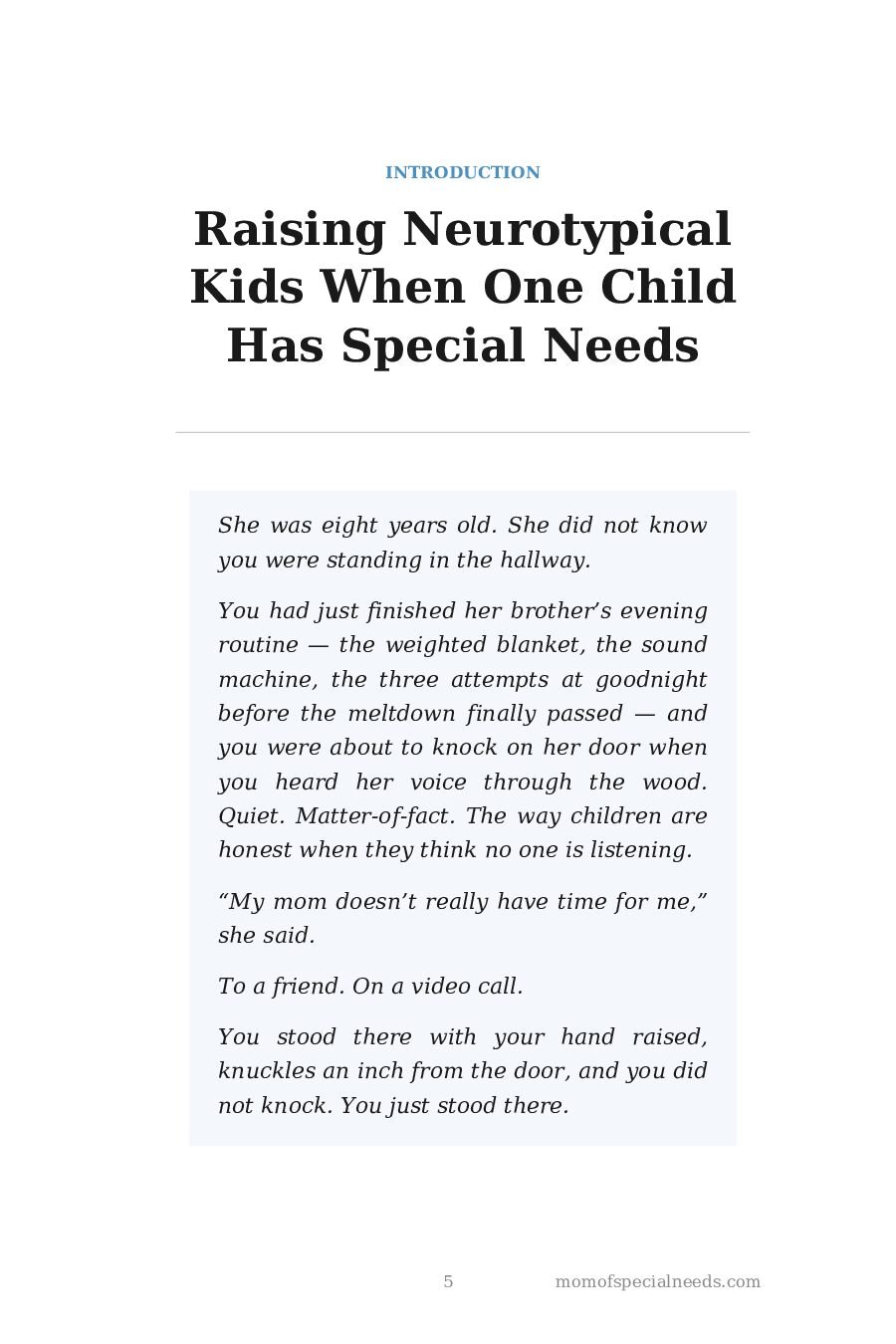
Siblings of special needs children need you too, and this guide shows you how
The siblings of special needs children in your house may be the ones who need you most right now. You have fought hard for your child with a diagnosis, the IEP meetings, the therapy waitlists, the daily weight of caregiving. But somewhere in that fight, your other children started getting the leftover version of you. And the child who never complains, who says “I’m fine,” who figures things out alone, may be quietly disappearing.
You are not failing your other children. But they may be struggling in ways no one has noticed yet.
The research is clear: neurotypical siblings of special needs children experience higher rates of anxiety, depression, and emotional distress than their peers, but are significantly less likely to receive support, because they have learned to look fine.
Siblings Matter is built for the mother who is already doing everything right for one child and is ready to do right by all of them.
What this is
Siblings Matter: Raising Neurotypical Kids When One Child Has Special Needs is a focused guide on supporting the siblings of special needs children, 9 chapters. Each section can be read in 5 minutes.
It is not a theoretical book about family dynamics. It is a practical guide for mothers who want to show up for every child in the house.
It is written from inside a special needs family.
What is inside this guide for siblings of special needs children
- The 4 warning signs your neurotypical child has become a “glass child”, and the one question most parents never think to ask
- Why telling your child “your sibling has it harder” is one of the most damaging things you can say, and what to say instead
- The role your other child may have taken on without anyone asking, and how to give it back before it shapes who they become
- Age-by-age language for explaining a sibling’s diagnosis to children from age 2 to 17, without minimising the truth or creating new fears
- The question every sibling eventually asks that most parents are completely unprepared for, and how to answer it in a way that protects both children
- A research-backed 5-step method for validating the messy, complicated, completely normal emotions your neurotypical child is already carrying
- How to create one-on-one connection even in weeks that feel impossible, without guilt, without equal time
- When your neurotypical child needs professional support, and exactly what to look for in a therapist who understands special needs family dynamics
- What the research says about the qualities that siblings of special needs children genuinely develop, and how to raise a child who carries this life as a strength, not a wound
Built for moms with no time
Each section is short. Read one a day during the time you are already spending scrolling on your phone in bed. Skip around. Pick sections as situations come up with your other children.
What you get when you buy this guide for siblings of special needs children
- The full Siblings Matter eBook (instant PDF download).
- 30-day money-back guarantee. No questions, no hoops.
- Direct email replies. Hit reply on any email and a real human reads it.
Trusted resources for siblings of special needs children
For deeper reading on this topic, these external resources are worth bookmarking.
- The Sibling Support Project, resources and research on siblings of special needs children
- Understood.org, family resources for children with learning and thinking differences
Other guides for special needs moms
If you are looking for related help, see also:
- School IEP Wars, win the services your child deserves
- Marriage on Life Support, survival guide for special needs couples
Frequently asked about siblings of special needs children
What does this book specifically cover for siblings of special needs children?
This book covers how to identify when a sibling is struggling silently, how to talk about diagnoses at every age, how to validate their emotions, when to seek professional support, and how to build connection despite an unequal caregiving load.
Will this work if my other child seems totally fine?
The children who “seem fine” are often the ones who most need this book. Glass children, the neurotypical siblings of special needs children who have learned to go unnoticed, rarely signal distress the way a child with a diagnosis does. This guide helps you see what is not being shown.
My kids are different ages. Is this still useful?
Yes. The guide includes age-specific language for conversations with children from age 2 through 17. You can use what fits your child right now and come back to other sections as they grow.
Is the eBook a PDF I can read on my phone?
Yes. PDF download. Works on any device. No account, no app.
What if it does not help?
Email hello@momofspecialneeds.com within 30 days and you get a full refund. No questions, no forms.
Who wrote this?
Written from inside a special needs family, by someone who watched a loved one’s diagnosis change everything. Not a therapist and not a clinician.
Want more than one guide? Get this book plus two more in the Survival Trio for $47, or all 24 in the All-Access Pass for $97.
Reviews
There are no reviews yet.