A sensory-friendly bedroom does not require a renovation or a big budget. It requires knowing what overwhelms your child and quietly removing it.
The bedroom is one space to get right. For the tools that go inside it, see our sensory tools for autism guide.
Sleep is the holy grail of special needs parenting. When my son went through a phase of waking every 45 minutes, I was desperate. That’s when I started redesigning his bedroom with sensory needs in mind, and it genuinely changed our lives.
Quick answer: Creating a sensory-friendly bedroom for a child with autism on a budget starts with addressing the highest-impact sensory inputs: light (blackout curtains), noise (white noise machine or soundproofing), and texture (preferred bedding). These three changes alone can dramatically improve sleep and regulation.
The good news? You don’t need to spend thousands. Most of the changes I made cost under $50.
Why Environment Matters So Much for Kids with Autism
Children with autism often have a nervous system that stays in a constant state of hyperarousal, always scanning for threats, always processing. A bedroom that reduces unnecessary sensory input helps the brain shift into ‘safe mode’ so sleep (and calm) can actually happen.
Step 1: Control the Light
Harsh overhead lighting is the enemy. Here’s what I switched to:
- Blackout curtains, non-negotiable for kids who wake with the sun
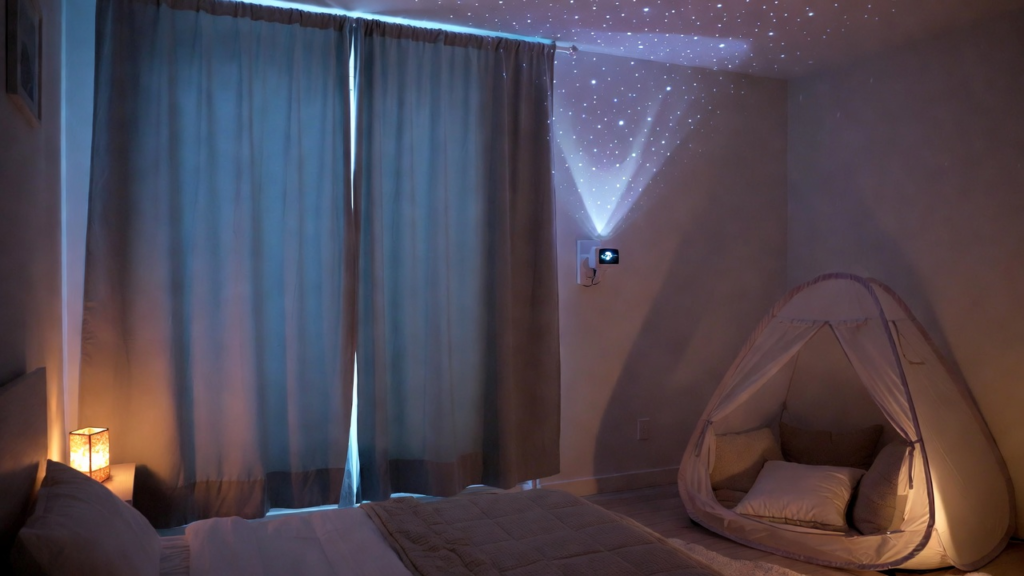
- A nightlight with a red or amber glow (not blue or white light, those signal ‘daytime’ to the brain)
- A LED star projector for kids who need something to focus on while falling asleep
Step 2: Control the Sound
My son could hear the neighbor’s TV through the wall. A white noise machine running at a consistent volume all night was one of the best $30 I ever spent. It masks the unpredictable sounds that jolt him awake. Creating Calm takes this same approach through the whole house, not just the bedroom.
Options for Sound Control:
- White noise machine (fan-like sound)
- Brown noise (deeper, more muffled, preferred by many kids on the spectrum)
- Nature sounds apps (rain, ocean, experiment to see what your child prefers)
- Acoustic panel foam on walls, looks great painted in their favorite color
Step 3: Create a ‘Calm Corner’ Within the Room
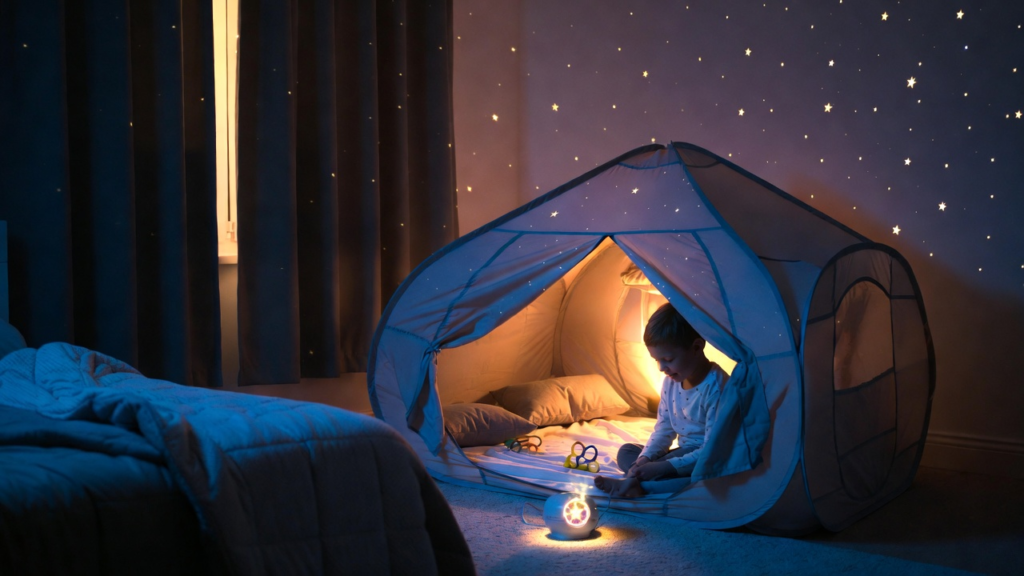
A calm corner is a designated space within the bedroom where your child can go to self-regulate. It’s not a time-out spot. It’s a safe haven they choose to go to.
What Goes in a Calm Corner:
- A small tent or pop-up canopy (the ‘enclosed’ feeling provides proprioceptive input)
- 2-3 sensory toys they love (a fidget, a squishy, a visual spinner)
- A weighted blanket in a size appropriate for their body weight
- Their favorite comfort items, no judgment
Step 4: Bedding and Textures
The wrong sheets can trigger a meltdown before bed even starts. Look for:
- 100% cotton or bamboo sheets (smooth, no scratchy tag labels)
- Seamless pajamas or tagless options
- A weighted blanket (generally 10% of body weight, always check with your OT first)
Step 5: Minimize Visual Clutter
For many kids with autism, a room full of toys and bright colors is an overstimulating nightmare at bedtime. I moved most of my son’s toys to a separate play area and kept his bedroom simple, just what he needs for sleep and calm.
Creating Calm: Designing a Soothing Home Environment for Special Needs
Sources and further reading
- National Institute of Mental Health research on autism
- Child Mind Institute’s guide to sleep problems in autism
Total Budget Breakdown (Our Setup)
- Blackout curtains: ~$25
- White noise machine: ~$30
- Red nightlight: ~$10
- Pop-up calm corner tent: ~$25
- Weighted blanket (child-sized): ~$40-$60
- Total: Under $150, and the best investment we made
The Science Behind Sleep and Sensory Environments for Autism
Sleep problems affect an estimated 40 to 80 percent of children with autism, according to National Institute of Mental Health research on autism. These sleep difficulties are not behavioral problems. They are neurological. The same sensory processing differences that make daytime regulation challenging create significant barriers to the calming of the nervous system that sleep requires. A bedroom environment that reduces sensory triggers and supports physiological wind-down is one of the most evidence-based interventions for improving sleep in autistic children.
The most research-supported environmental modifications for autism sleep are: consistent darkness through blackout curtains or blinds, reduction of ambient noise through white noise or soundproofing materials, temperature regulation ideally slightly cooler than what is typical, and removal of visual stimulation that can maintain arousal. According to the Child Mind Institute’s guide to sleep problems in autism, behavioral sleep interventions work significantly better when implemented in a sensory-appropriate environment. The environment sets the stage for everything else.
For parents dealing with wandering at night, additional safety features are often necessary: door alarms, bed rails, window locks, and visual barriers that signal “nighttime means staying in this space.” More comprehensive guidance on creating a safe home environment beyond the bedroom covers these safety dimensions in depth.
Budget-Friendly Bedroom Modifications That Actually Work
The single highest-impact, lowest-cost modification for most autistic children’s bedrooms is blackout curtains. Light sensitivity is common in autism and even small amounts of ambient light can disrupt the melatonin production needed for sleep onset. Heavy-duty blackout curtains typically cost fifteen to thirty dollars and reduce the most common sleep barrier for sensory-sensitive children. White noise machines or apps on an old device are equally affordable and equally impactful for children with auditory sensitivity. A small pedestal fan often serves both purposes simultaneously by providing white noise and cooling.
If you want more of this kind of honest, practical guidance, Creating Calm goes deeper into designing every room of your home as a sensory environment that works for your specific child.
Building a sensory-friendly bedroom on a real budget
Start with the three things that affect sleep most: light, sound, and the feel of the bedding. Fix those first.
Frequently Asked Questions
How dark should the bedroom be for a child with autism?
Dark enough that you cannot see your hand in front of your face when the lights are off. Complete darkness supports melatonin production, which is essential for sleep onset. Many children with autism have altered melatonin timing, and even low-level ambient light can disrupt it further. Blackout curtains plus door gap light blocking covers most situations adequately.
What bedding textures work best for sensory-sensitive children?
It depends on your child’s specific sensory profile. Smooth, tight-weave fabrics without tags work well for most texture-sensitive children. Jersey knit is soft and stretchy without being scratchy. Some children with proprioceptive seeking do better with weighted blankets or tight-fitting compression sheet sets. Let your child’s own responses guide you more than any generalization.
Should I remove all toys from the bedroom to improve sleep?
For many children with autism, having some preferred items in the bedroom provides comfort rather than stimulation. The goal is not eliminating all objects but ensuring that any objects present are calming rather than exciting. Remove screen devices, lights, and highly stimulating toys. Comfort items, stuffed animals, and favorite objects that are part of the child’s self-soothing toolkit are typically fine.
How do I handle a child who will not stay in bed?
This is a behavioral sleep issue that may require input from a behavioral therapist or your child’s OT, in addition to environmental modifications. An enclosed bed frame, bed tent, or floor mattress near the door can reduce the logistical distance to bedtime success. Work with your child’s therapy team to build a specific protocol tailored to their behavioral profile.
Are melatonin supplements safe for autistic children?
Low-dose melatonin is commonly used for sleep difficulties in autism and has a reasonable safety profile for short-term use. However, consult your child’s pediatrician before starting any supplement, as appropriate dosing varies by age and there may be interactions with other medications your child takes.
How long does it take for bedroom changes to improve sleep?
Environmental changes like blackout curtains and white noise can show effects within the first week. Behavioral sleep protocols typically show improvement within two to four weeks of consistent implementation. If sleep does not improve meaningfully after a month of consistent changes, involve your child’s medical team to evaluate whether other factors, including medical causes of sleep disruption, need to be addressed.
The Bedtime Routine Is Half the Battle
No bedroom modification works in isolation from the bedtime routine that precedes sleep. A sensory-friendly bedroom is most effective when paired with a consistent, predictable pre-sleep routine that gradually reduces sensory input and arousal over 30 to 60 minutes. Bath, dim lights, visual schedule of bedtime steps, preferred calming activity, and a specific verbal cue that sleep is coming all work together to prime the nervous system for the environmental cues of the bedroom. The bedroom is the landing pad. The routine is the runway. Both matter.
Many families find that investing time in creating a solid bedtime routine reduces the amount of time it takes to get the child settled, which gives the parent more recovery time in the evening. That recovery time matters enormously for your own well-being and stress management. Protecting the bedtime routine is one of the most self-protective things you can do as a special needs parent.
The bedroom modifications you make are an investment in consistency. The more predictable the sleep environment, the faster the child’s nervous system learns that this place, at this time, means rest. That learning takes weeks to solidify. Be patient with the process. The effort compounds into significantly easier nights over time.