After years of trial and error, I learned that the best sensory toys for kids with autism are the ones that calm, not the ones that overstimulate.
These toys are part of a bigger sensory picture. Start with our sensory tools for autism guide to match tools to needs.
I have spent an embarrassing amount of money on toys that promised to help my son regulate his sensory system. Some ended up under the couch. A few became absolute obsessions. This list? Only the ones that survived our house.
Quick answer: The best sensory toys for kids with autism and sensory processing disorder are ones matched to your child’s specific sensory profile, whether they seek or avoid sensory input. Focus on toys that support regulation, not just entertainment.
Whether your child is a sensory seeker who craves input or a sensory avoider who gets overwhelmed easily, there’s something here for you.
What Makes a Toy ‘Sensory-Friendly’?
A sensory toy isn’t just any toy. It’s designed to provide specific types of input to help a child’s nervous system self-regulate. For kids with Autism Spectrum Disorder (ASD) or Sensory Processing Disorder (SPD), the right sensory input can mean the difference between a meltdown and a calm afternoon.
Best Sensory Toys for Sensory Seekers
Sensory seekers need MORE input — they crave movement, pressure, and texture.
1. Weighted Lap Pads
A portable way to give that deep-pressure input kids crave. My son uses his during homework time and at restaurants. It’s a game-changer for keeping him grounded without drawing attention.
2. Liquid Motion Bubblers
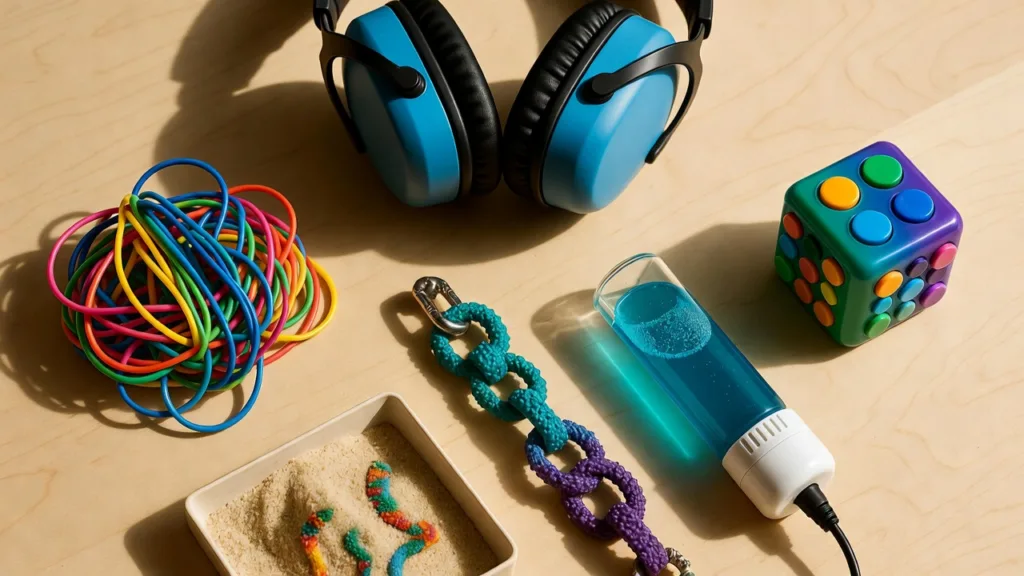
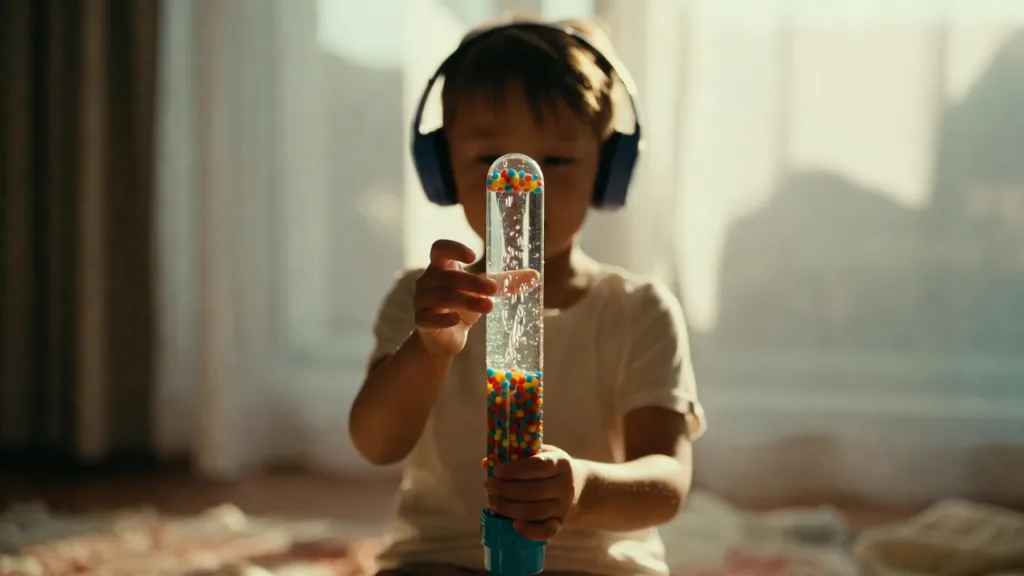
These mesmerizing tubes of colored liquid were the first thing that ever gave my son a 5-minute break from stimming. They’re visually calming and work for seekers and avoiders alike.
3. Chew Necklaces (Chewelry)
If your child chews everything — shirts, pencils, fingers — a food-grade silicone chew necklace is safer and more socially acceptable. Look for ones rated for the level of chewing your child does (light, moderate, or heavy).
4. Therapy Swing (Indoor)
Nothing regulates my son faster than swinging. A simple indoor therapy swing installed in a doorframe gives him vestibular input — the kind that calms the nervous system almost immediately.
Best Sensory Toys for Sensory Avoiders
Avoiders are easily overwhelmed and need toys that offer gentle, controlled sensory input.
5. Kinetic Sand
Unlike regular sand, kinetic sand doesn’t stick to hands. It provides tactile input without the chaos. Start with a small amount and let your child approach it on their terms.
6. Noise-Canceling Headphones
Technically not a ‘toy,’ but the single most impactful sensory tool in our house. We don’t go anywhere without them — grocery stores, airports, family gatherings.
7. Fidget Cubes
Six sides, six different ways to fidget. Clicking, sliding, rolling — perfect for kids who need to keep their hands busy to stay focused. Great for school too.
Tips Before You Buy
- Always consider your child’s specific sensory profile — seeker vs. avoider
- Start small and introduce one new toy at a time
- Let your child lead — if they avoid it, don’t force it
- Talk to your occupational therapist before making big purchases
One Last Thing From One Mom to Another
The ‘best’ sensory toy is the one your child actually uses. Don’t feel pressured to buy every trending product. Trust what you know about your kid, watch how they play, and let that guide you.
What Makes a Toy Actually Sensory-Beneficial
Not every toy labeled “sensory” is equally beneficial for every child. According to the Child Mind Institute’s explanation of sensory processing differences, children with sensory processing disorder can be sensory-seeking, sensory-avoiding, or both in different sensory channels. A toy that helps a sensory-seeking child regulate can overwhelm a sensory-avoiding child. Before choosing sensory toys, understand your child’s specific sensory profile, ideally in collaboration with an occupational therapist who has done a formal sensory evaluation.
The most effective sensory toys are ones your child returns to consistently, not just once. The best indicators of a good fit are: the child’s breathing slows during use, they become calmer or more focused, they choose it voluntarily during dysregulated moments, and they use it in the way you intended rather than in a way that escalates arousal. A toy that passes these tests in your child’s hands is more valuable than any toy that gets high reviews from other children with different profiles. Your child’s daily routine and environment are the context in which any sensory tool either works or does not.
Top Sensory Toy Categories Worth Exploring
Tactile tools include kinetic sand, putty, fidget cubes, textured balls, and slime for children who seek tactile input. Auditory tools include noise-canceling headphones for the avoidant child and musical instruments, sound-generating objects, or ASMR-type toys for the sensory-seeking child. Proprioceptive tools include trampolines, body socks, resistance bands, and weighted lap pads. Vestibular tools include rocking toys, swings, and balance boards. Visual tools range from lava lamps and light-up fidgets to calming light projectors. Building a sensory-supportive home environment around these tools compounds their effectiveness significantly.
If you want more of this kind of honest, mom-to-mom guidance, Creating Calm goes deeper into building a home environment that supports your child’s sensory regulation needs beyond any single toy or tool.
What makes the best sensory toys for kids with autism
The right toy meets a specific need: pressure, movement, sound, or focus. Match the toy to the need and it will actually get used.
Frequently Asked Questions
How do I know if a sensory toy is right for my child?
Watch for calming rather than escalating effects during use. A good sensory tool produces slower breathing, more focused attention, and voluntary return to the toy during difficult moments. If a toy increases dysregulation or becomes a source of perseveration, it may not be the right fit regardless of its reviews.
Should I work with an OT before buying sensory toys?
Ideally yes. An occupational therapist can conduct a formal sensory evaluation and recommend toy types that match your child’s specific sensory processing profile. This saves money and time compared to trial-and-error purchasing. If OT access is limited, observe your child carefully across sensory channels before investing.
Are weighted blankets and vests appropriate for all children with autism?
No. Weighted tools are appropriate for children who seek proprioceptive input and are calmed by deep pressure. They are not appropriate for children who avoid pressure or have certain medical conditions. Consult your child’s OT or physician before using weighted tools, especially for sleeping.
What sensory toys work for a child who destroys everything?
Look for highly durable options specifically designed for aggressive use: commercial-grade kinetic sand, silicone putty, rubber chew tools, heavy-duty fidget tools, and impact-resistant sensory items. Some destruction is sensory-seeking behavior and redirecting it to appropriately durable materials is more effective than constant replacement of delicate items.
How many sensory toys does my child actually need?
Fewer than you might think. Two or three tools that genuinely work for your child are more valuable than a room full of options. Rotate tools to maintain novelty, keep favorites consistently accessible, and resist the urge to solve every hard moment with a new purchase. The most effective sensory tool is usually the one that your child already uses reliably.
Can siblings use sensory toys too?
Yes. Most sensory tools are beneficial for nervous systems of all types under stress. Letting siblings use the same tools reduces the stigma of sensory differences and can actually help siblings understand their brother or sister’s needs more concretely than any explanation could.
Beyond Toys: Building a Sensory Lifestyle
The most effective sensory supports are not individual products. They are intentional daily practices that embed sensory regulation opportunities throughout the day. A movement break every 90 minutes is more powerful than any single sensory toy. A predictable morning sensory routine, perhaps five minutes of heavy work before school, reduces transition meltdowns more than any fidget purchased in the moment of crisis. The toys and tools are best understood as supports within a larger sensory lifestyle, not substitutes for it.
Talk to your child’s OT about developing a sensory diet, which is a scheduled program of sensory activities tailored to your child’s specific needs and daily rhythm. A sensory diet is different from a list of sensory toys. It is a planned, purposeful integration of sensory activities into your child’s day in a sequence that keeps their nervous system regulated rather than oscillating between over- and under-arousal.
The toys on this list are starting points. The real work is observing your child, learning their patterns, working with their OT, and gradually building a sensory environment and routine that makes daily life more manageable and more joyful for all of you. That work is worth doing. It changes everything.
Budget-Friendly Sensory Tool Tips
Many sensory tools can be made or adapted from household items at a fraction of the cost of specialty products. A weighted lap pad can be made with rice in a cloth bag. A calm-down bin can be stocked with items from a dollar store: squishy balls, putty, smooth stones, small fidgets, a simple pinwheel for breath work. Sand or dried beans in a bin make excellent tactile play. The sensory benefit comes from the sensory input, not from the brand name or price tag. More ideas for creating a sensory-friendly home on a budget are worth exploring alongside this toy guide.
Start small, observe carefully, and build from what you learn about your specific child. There is no perfect sensory toolkit that works for every child with autism or SPD. There is just the specific toolkit you discover, over time, for yours.