
Why autistic people experience more chronic pain
The nervous systems of autistic individuals process sensory information differently than non-autistic nervous systems. This same difference that affects how someone processes sound or touch also affects how they experience pain signals. Research suggests that autistic individuals may have altered pain thresholds that vary significantly from the non-autistic population. Some autistic people experience pain as more intense than it would be for a neurotypical person in the same situation. Others have difficulty identifying or localizing pain, not because it is not there, but because the interoceptive signals do not connect clearly to the body location or emotional signal of pain. Interoception, the internal sense of what is happening inside your body, is often atypical in autism. An autistic child may not recognize that a stomachache is pain until it becomes severe, or may experience a headache as a general sense of dysregulation rather than head pain specifically.What conditions cause chronic pain in autistic children
Several conditions are more common in autistic children and directly cause or contribute to chronic pain. Gastrointestinal conditions are among the most prevalent. Research consistently shows higher rates of constipation, irritable bowel symptoms, acid reflux, and functional abdominal pain in autistic children compared to non-autistic children. A child who is frequently holding their stomach, arching their back, or showing distress after meals may be experiencing real GI pain that has not been identified. Hypermobility disorders, including hypermobile Ehlers-Danlos Syndrome (hEDS) and joint hypermobility syndrome, appear more frequently in autistic populations. Joints that move beyond their normal range cause microtraumas and chronic inflammation over time. Children with hypermobility often describe aching joints, fatigue, and pain after physical activity. Tips for Talking to Doctors has 18 scripts for this, including how to describe pain in a child who cannot report it. Headaches and migraines are more common in autistic individuals, as are chronic tension headaches. Sensory sensitivity to light and sound, common in autism, may increase headache frequency and severity. Musculoskeletal pain from prolonged tension, altered gait patterns, and motor differences can create chronic discomfort in the back, hips, and legs over time.How autistic children communicate pain differently
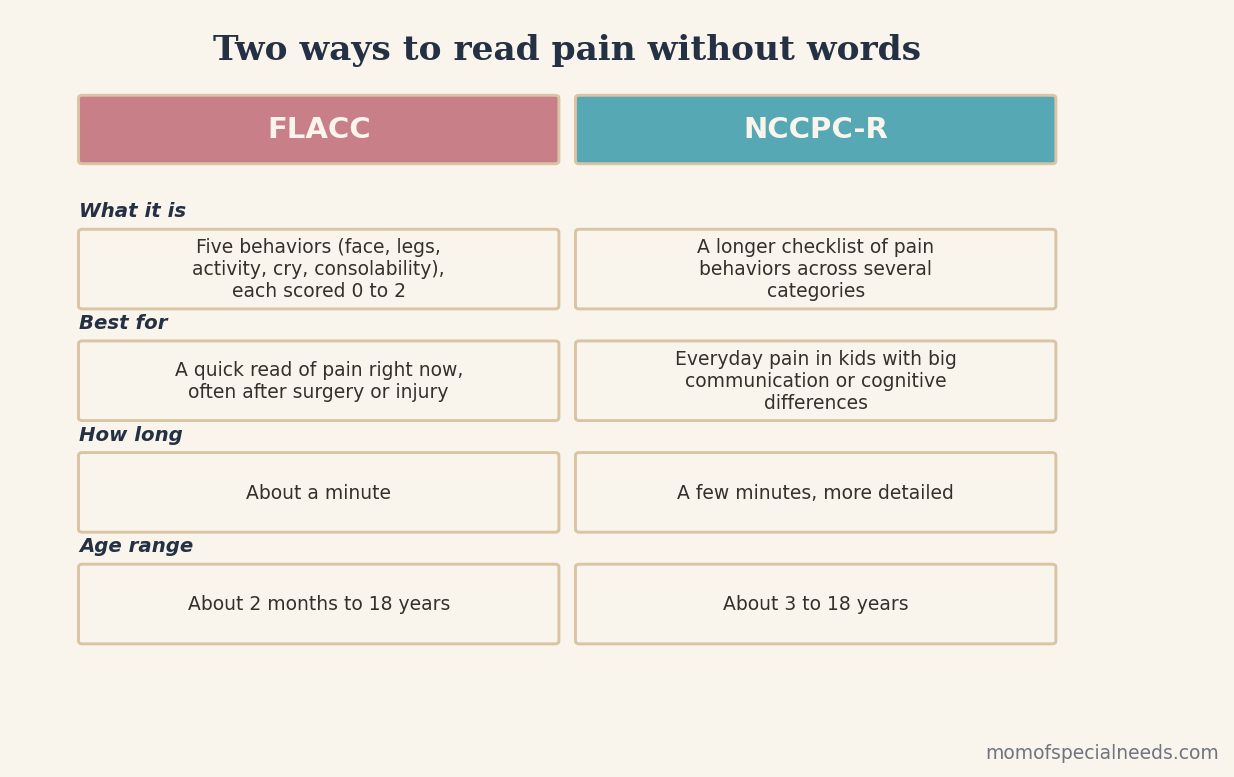
One of the most significant barriers to treating chronic pain in autistic children is that they may not communicate it in recognizable ways. An autistic child who cannot verbalize pain may communicate it through increased behavioral changes, greater aggression, self-injurious behavior, withdrawal, refusal to engage in previously enjoyed activities, or changes in eating and sleeping patterns. What looks like a behavioral episode to a parent or teacher may actually be a child in significant physical pain who has no other way to signal it. Some autistic children may report pain in ways that are not taken seriously because they describe it unusually. They may say “my brain hurts” to describe stomach pain, or describe a headache in terms of light or sound sensitivity rather than using the word pain. For non-speaking autistic individuals, pain assessment requires systematic observation of behavioral changes, physical examination, and tools specifically designed for individuals who cannot self-report.What parents and doctors miss most often
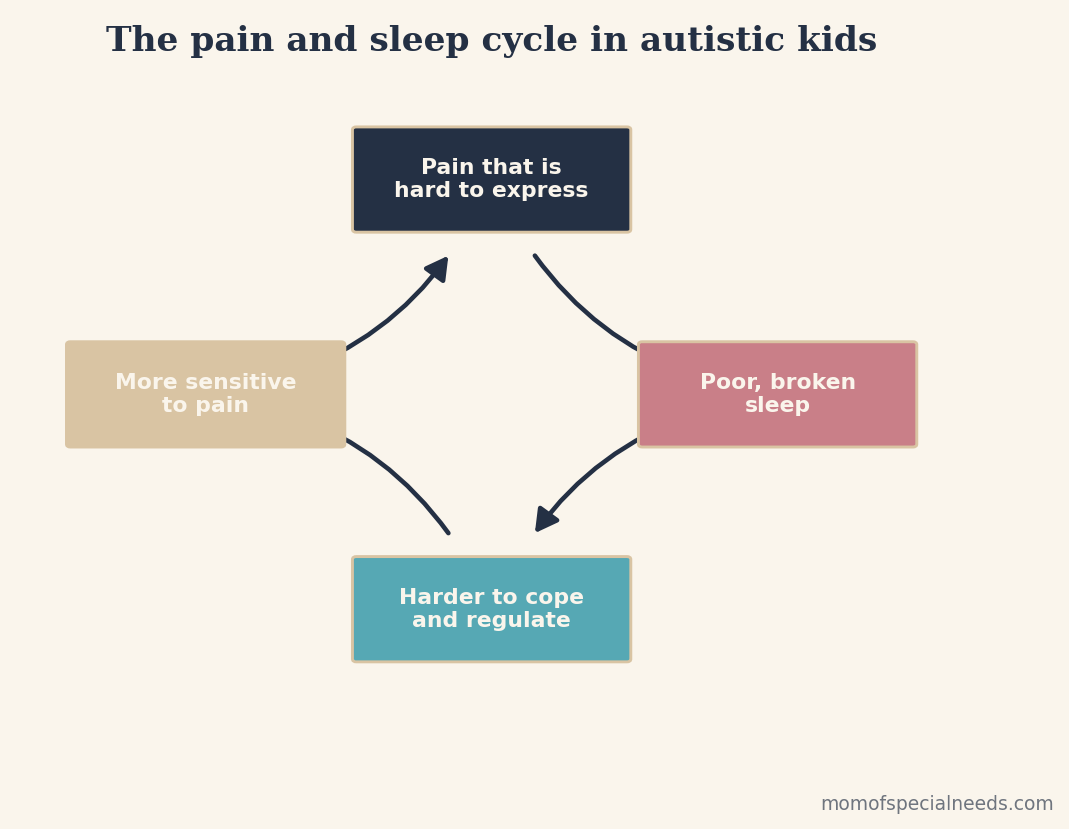
The most commonly missed diagnosis in autistic children with chronic pain is gastrointestinal disease. GI pain in autistic children is frequently attributed to anxiety, food selectivity, or behavioral issues without thorough medical investigation. A second frequently missed area is dental pain. Autistic children who cannot cooperate with dental examinations or who have sensory sensitivities around their mouth may go longer without dental care, and dental pain can be a significant source of unrecognized chronic pain and behavioral change. Headaches and migraines are often attributed to sensory overload or meltdowns rather than investigated as primary headache disorders. Sleep disturbances are both a cause and effect of chronic pain, and this cycle is frequently not identified. Chronic pain disrupts sleep, and poor sleep lowers pain threshold, creating a worsening spiral.How to advocate for your autistic child’s pain
If you believe your child is experiencing chronic pain, the first step is systematic observation. Keep a record of behavioral changes, timing, and potential triggers. Note whether changes occur after meals, during specific physical activities, at certain times of day, or in response to specific sensory environments. When speaking with medical providers, be explicit that behavioral changes may signal pain. Ask directly: could this behavior be a pain response? Request physical evaluation rather than accepting behavioral explanations for everything. A developmental pediatrician with experience in autism can help coordinate evaluation across specialties. If GI symptoms are present, request a referral to a pediatric gastroenterologist. If joint pain or hypermobility is suspected, ask for a referral to a pediatric rheumatologist or geneticist. The NIH National Institute of Child Health and Human Development provides research on pediatric pain assessment and treatment that can help you understand evidence-based approaches.
Say it so the doctor acts
Tips for Talking to Doctors: 18 Scripts That Get Special Needs Parents Heard
Pain in an autistic child gets missed because the report does not sound like pain. Tips for Talking to Doctors gives you 18 word for word scripts that get a parent taken seriously, including how to describe behaviour as a symptom and how to ask again after a no.
Get the doctor scripts $29.99Sources and further reading
Pain assessment tools for non-speaking autistic individuals
Frequently asked questions
Is chronic pain more common in autistic children?
Yes, the autism chronic pain connection is well documented. Research suggests yes. Autistic individuals have higher rates of several conditions that cause chronic pain, including gastrointestinal disorders, hypermobility, and headaches. They also face additional barriers to having pain recognized and treated because of communication differences.How do I know if my autistic child’s behavior changes are pain-related?
Look for patterns. If behavior changes are consistent with timing, such as after meals (possible GI), after physical activity (possible joint), or at specific times of day, this may suggest a physical cause. A systematic pain diary and conversation with your child’s doctor is the appropriate next step.Can sensory sensitivities cause physical pain in autism?
Sensory hypersensitivity, common in autism, can lower the threshold at which stimuli become painful. If you need to understand sensory overload in your child, the guide to sensory overload signs in autism explains this in depth. Sounds that are merely loud for a neurotypical person may be genuinely painful for an autistic person. This is a real neurological experience, not an exaggeration.What specialist should I see for an autistic child with chronic pain?
This depends on where the pain appears to be located. For GI pain, start with a pediatric gastroenterologist. For joint pain or hypermobility, a pediatric rheumatologist. For headaches, a pediatric neurologist. A developmental pediatrician or autism clinic can help coordinate multi-specialty evaluation.What to remember
Autism and chronic pain is a combination that is real, underdiagnosed, and treatable. Your child’s body is telling you something. Pain that presents as behavior is still pain. You are not imagining it, and you are right to push for answers. Every child deserves to have their physical experience taken seriously. If you want ongoing support navigating autism and health topics, the MoSN newsletter sends one email a week with honest, practical information. Subscribe and join tens of thousands of parents walking this path.Next step
Tips for Talking to Doctors: 18 Scripts That Get Special Needs Parents Heard
You already believe your child is in pain. The appointment is where that has to land. Tips for Talking to Doctors is 18 scripts for exactly those minutes.
Get the doctor scripts $29.99