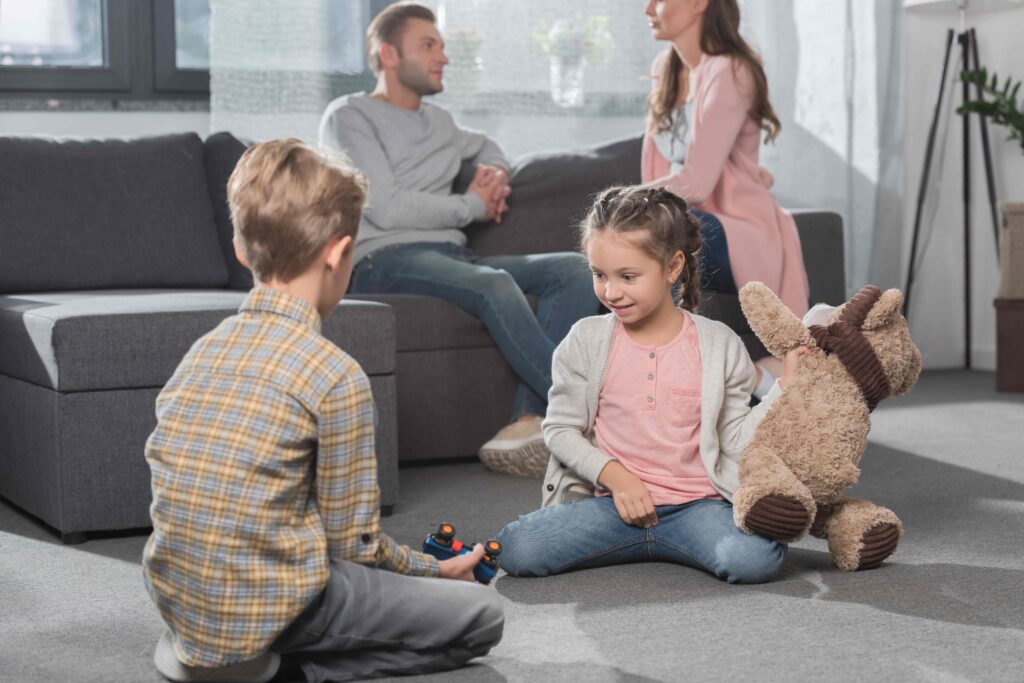
Autism smell sensitivity, also called olfactory hypersensitivity, means your child’s brain processes scent with an intensity that most people never experience. Smells that you barely notice, like cafeteria steam, a teacher’s perfume, or the cleaning products in a public bathroom, can hit your child like a physical assault. This is not behavioral. It is neurological. And there are real, specific strategies that help, both at home and at school.
Quick stats first
- Sensory processing challenges affect between 69% and 95% of autistic children, and atypical sensory response is now part of the official DSM-5 diagnostic criteria for autism (source: CDC ADDM Network, Autism Research journal, 2022).
- Autistic individuals detected odor at a mean distance of 24.1 cm from the nose compared to 14.4 cm for neurotypical controls, demonstrating measurably stronger olfactory detection (source: Autism Research Centre, University of Cambridge, 2014).
- ARFID, the eating disorder most commonly linked to sensory food refusal, occurs in approximately 11.41% of autistic individuals according to a 2025 meta-analysis published in PMC (source: Sader et al., 2025).
Why does my autistic child react so strongly to smells that no one else notices?
Your child is not overreacting. Their brain is genuinely detecting smells earlier, more intensely, and for longer than a neurotypical brain does.
Research from the Autism Research Centre at the University of Cambridge confirmed that autistic individuals have a measurably lower olfactory detection threshold. In plain terms: they smell things before other people do, and they smell them stronger. What you register as background noise, their brain flags as a full alarm.
But here is the part that makes this particularly hard to manage. It is not just about intensity. It is about persistence. For many autistic children, a scent does not fade the way it does for you. It can linger in their perception long after the source is gone. I once watched my son spend an entire afternoon unable to focus on anything because a neighbor had grilled outside an hour earlier. By the time the smell faded for me, it was already over. For him, it was still happening.
The neuroscience behind this comes down to how olfactory information is routed in the autistic brain. Unlike most sensory inputs, smell travels directly to the amygdala and the limbic system, the parts of the brain that process emotion and threat response. There is almost no filtering step. So when your child encounters a smell that overwhelms them, their nervous system is treating it as a genuine danger signal. That is why the reaction can look like a meltdown, refusal, or shutdown, because in their body, it is an emergency.
Understanding this does not make the cafeteria less overwhelming. But it does change how you talk to teachers, how you write IEP goals, and how you respond when your child gags in the grocery store. It was never stubbornness. It was always their nervous system doing exactly what it was built to do. If you want to understand more about how sensory meltdowns happen and what to do in the moment, that article walks through it step by step.
What situations make autism smell sensitivity the worst?
The hardest smell environments for autistic children are predictable once you know what to look for.
School cafeterias are the single most common trigger parents report. Hot food smells, dozens of different lunches, industrial cleaning products underneath it all, and no escape. Your child is expected to sit in that room for 20 to 30 minutes and eat, focus, and socialize. For a child with olfactory hypersensitivity, that is an impossible ask without supports in place. Creating Calm works through the house room by room, and smell is one of the inputs it fixes first.
Here is where the list gets specific, because vague awareness does not help you. The highest-risk smell environments are:
- Cafeterias and lunch rooms (mixed food odors plus bleach or industrial cleaner)
- Restrooms (cleaning products, air fresheners, other bodily odors)
- Hallways during cooking classes or nearby restaurant zones
- Other people’s lunches in shared spaces, especially fish, eggs, or heavily spiced foods
- Cleaning products at home and school (particularly pine, bleach, and citrus-based products)
- Personal care products: perfume, scented lotion, hair products on teachers or peers
- Scented markers, art supplies, and sensory bins that include aromatic materials
- Stores with candle sections, bath product displays, or strong floral departments
- Medical environments with antiseptic smells
The challenge is that most of these spaces do not come with a warning label. Your child walks into an environment that looks normal to you and immediately goes into survival mode. That gap between what you see and what they experience is where the conflict happens.
For a deeper look at how olfactory sensory processing in autism works from a neurological standpoint, the STAR Institute has a solid overview of the sensory integration process.
One thing worth naming: smell sensitivity rarely shows up alone. It almost always travels with other sensory sensitivities, and the combined load is what pushes kids over the edge. A loud cafeteria plus fluorescent lights plus food smells is a triple hit. Addressing smell as part of the full sensory picture, not in isolation, tends to get better results.
Is smell sensitivity why my autistic child refuses to eat certain foods?
Yes, and this is one of the most underdiagnosed connections in autism-related feeding difficulties.
When your child refuses a food they have never tasted, or gags before the food even reaches their mouth, smell is almost always part of the picture. The aversion begins before eating starts. Proteins with strong odors, like meat, fish, and eggs, are the most commonly rejected. So are foods with fermented or pungent components: cheese, vinegar-based dressings, certain vegetables as they cook.
This connection matters even more when ARFID is on the table. Avoidant Restrictive Food Intake Disorder is diagnosed in approximately 11.41% of autistic individuals, and sensory sensitivity, including olfactory sensitivity, is one of the three recognized drivers of ARFID. When a child’s list of safe foods is mostly beige, bland, and low-odor, that is not coincidence. That is olfactory-driven food selectivity.
What makes this hard to distinguish from regular picky eating is that the behavior looks the same from the outside. Your child refuses. They gag. They cry. They leave the table. Parents are often told it is a behavioral issue or a phase. It is usually neither. The smell of that food is genuinely aversive to their nervous system at a level that bypasses choice.
Some practical realities here:
Cooking smells are a separate challenge from the food itself. Your child may tolerate a food cold or at room temperature but refuse it when it is hot and releasing stronger odor molecules. That is olfactory sensitivity driving the refusal, not the food.
Mixing foods on a plate changes the smell profile. Even if each food is “safe” individually, the combined smell can become intolerable. Separate plates, or a plate with barriers, often helps more than it should, but it works.
If your child’s eating profile is very narrow and the refusal feels like fear rather than preference, bring ARFID specifically into the conversation with their pediatrician or feeding therapist. The word matters because it changes the treatment approach. You can read more about ARFID and autism on the NICHD site, which covers the range of autism-related conditions and food challenges.
What can I actually do tonight about my child’s smell sensitivity?
You cannot rewire your child’s brain tonight. But you can reduce their daily olfactory load significantly with concrete changes that start now.
At home:
- Audit your cleaning products first. Switch to fragrance-free dish soap, laundry detergent, and multi-surface cleaners. Brands like Seventh Generation Free and Clear or Attitude Fragrance Free are widely available. Do not use scented candles, plug-in air fresheners, or fabric softener sheets in shared spaces.
- Cook with ventilation. Run the hood fan before cooking starts, not just during. Open a window. If your child is extremely smell-reactive, a small air purifier with a HEPA and activated carbon filter in the kitchen or dining area can reduce airborne cooking odors significantly.
- Designate a smell-safe space. One room in your home should be as scent-neutral as possible. No candles, no diffusers, no perfume sprays. This is where your child can decompress when smell overload has happened elsewhere.
- Try proprioceptive input before high-smell environments. Heavy work, like carrying a backpack with light weights, wall push-ups, or a tight hug, can reduce overall sensory reactivity including olfactory sensitivity. Ten minutes of heavy work before entering a difficult smell environment does not eliminate the problem but can lower the baseline.
- Consider a smell-neutral nasal option. Some families use a small amount of unscented coconut oil or petroleum jelly just inside the nostrils before entering high-smell environments. It does not block smell entirely but creates a physical buffer that slows the input. Talk to your child’s occupational therapist before starting this.
If you want to learn more about proprioceptive activities for sensory regulation, that guide has a complete list of heavy work activities ranked by ease and effectiveness for home use.
If this is helping, the longer version with 27 specific sensory regulation tactics, including a full section on olfactory accommodations and school scripts, is in Boundless Love.

Creating Calm: Designing a Soothing Home Environment for Special Needs
Sources and further reading
How do I get smell accommodations written into my child’s IEP or 504?
Schools are required to provide accommodations for documented sensory needs, but olfactory accommodations are almost never offered unless you ask for them by name.
The first step is documentation. You need a licensed occupational therapist to evaluate your child’s sensory processing profile and specifically note olfactory hypersensitivity in their report. Without that documentation, the school has no obligation to respond. With it, you have grounds for specific, enforceable accommodations.
Here is what to ask for by name:
- Fragrance-free classroom policy (this covers the teacher’s perfume, lotion, and students’ scented products)
- Alternative lunch location to the cafeteria, such as a classroom, library, or sensory room
- Prior notice when cleaning products will be used in or near your child’s classroom
- Seating that is positioned away from air vents that carry cafeteria smells
- Permission to wear a small, personal smell buffer like a scented wristband with a preferred scent, if your child uses familiar smell as a calming input
When you write these into the IEP or 504, use sensory-specific language. “My child has documented olfactory hypersensitivity that significantly impairs their ability to access the educational environment” is more enforceable than “smells bother her.” Use the OT report language directly.
If the school pushes back, the Individuals with Disabilities Education Act requires that your child have access to a free and appropriate public education in the least restrictive environment. A cafeteria that causes your child to gag and leave is not an appropriate environment. You have standing to advocate for a change.
For a deep dive into IEP accommodations for sensory needs, that guide covers what to say, what to bring, and how to handle pushback from the school team.
For an overview of what sensory accommodations under IDEA actually entitle your child to, the Parent Center Hub breaks down IEP rights in plain language.
Frequently asked questions
Does autism smell sensitivity ever get better with age?
For some autistic individuals, olfactory reactivity does decrease as they develop better nervous system regulation and learn their own coping strategies. For others, it remains consistent throughout life but becomes more manageable as they gain self-awareness and advocacy skills. There is no guaranteed trajectory, and the goal is building tools to navigate it, not waiting for it to go away.
Can my child smell things that are not there?
Some autistic individuals do experience phantom smells or have difficulty distinguishing whether a smell is current or a remembered sensory impression. If your child is reporting smells that you cannot detect and this is causing significant distress, bring it up with their developmental pediatrician to rule out other factors.
Why does my autistic child love certain strong smells but hate others?
This is extremely common and does not mean the sensitivity is fake or inconsistent. Olfactory processing in autism often involves atypical selectivity, meaning the brain may find some strong smells regulating or pleasurable while others are intolerable. The response is about how the brain codes that specific scent, not the objective strength of the smell.
Can occupational therapy help with smell sensitivity?
Yes. Occupational therapists trained in sensory integration can work on olfactory desensitization over time, as well as help build a sensory diet that reduces overall reactivity. Look specifically for an OT with training in sensory integration or DIR/Floortime. Progress is gradual but real.
Is smell sensitivity a reason my child cannot go to certain restaurants or family events?
It is a valid reason and not an excuse. Environments with heavy, mixed food smells or strong cleaning products can be genuinely inaccessible for a child with olfactory hypersensitivity. Planning for it, like calling ahead to request seating away from the kitchen, arriving early before smells build, or bringing a familiar scent item, can make some environments workable. Others will remain too difficult regardless.
What do I tell family members who think my child is being dramatic about smells?
You do not need to convince anyone in the middle of a hard moment. Have the conversation separately, in a calm window, with one specific research point: autistic individuals have measurably lower olfactory detection thresholds than neurotypical people, confirmed by researchers at the University of Cambridge. It is not behavioral. It is sensory. And then hold the line.
Are there any scents that commonly calm autistic children?
Some autistic children find specific familiar scents regulating, not because of the scent itself but because of the familiarity and predictability. Lavender is commonly mentioned, but what matters is what is familiar and positive to your individual child. If your child has a scent they seek out, that is useful information. Bringing that scent into difficult environments can sometimes serve as a counterweight.
Can smell sensitivity make school refusal worse?
Absolutely. School refusal in autistic children is rarely about school itself and almost always about specific, unbearable sensory or social experiences that happen there. Cafeteria smell is one of the most underrecognized contributors. If your child’s school refusal spikes on certain days or around lunchtime, smell is worth investigating before assuming it is anxiety alone.
What to remember
Your child is not being dramatic, controlling, or difficult. They are navigating a world that was not built for their nervous system, and smell is one of the ways that gap shows up most painfully. The fact that you are researching this at all means you are already doing the most important thing: taking their experience seriously.
You deserve a roadmap, not just reassurance. Document, advocate, and reduce the daily load wherever you can. You will not fix it in a week. But you can make the world a little easier to walk through.
If you want more like this, the MoSN newsletter sends one honest, practical email a week for parents who are doing the hard work. Subscribe and get the free 60-second meltdown reset guide when you sign up.