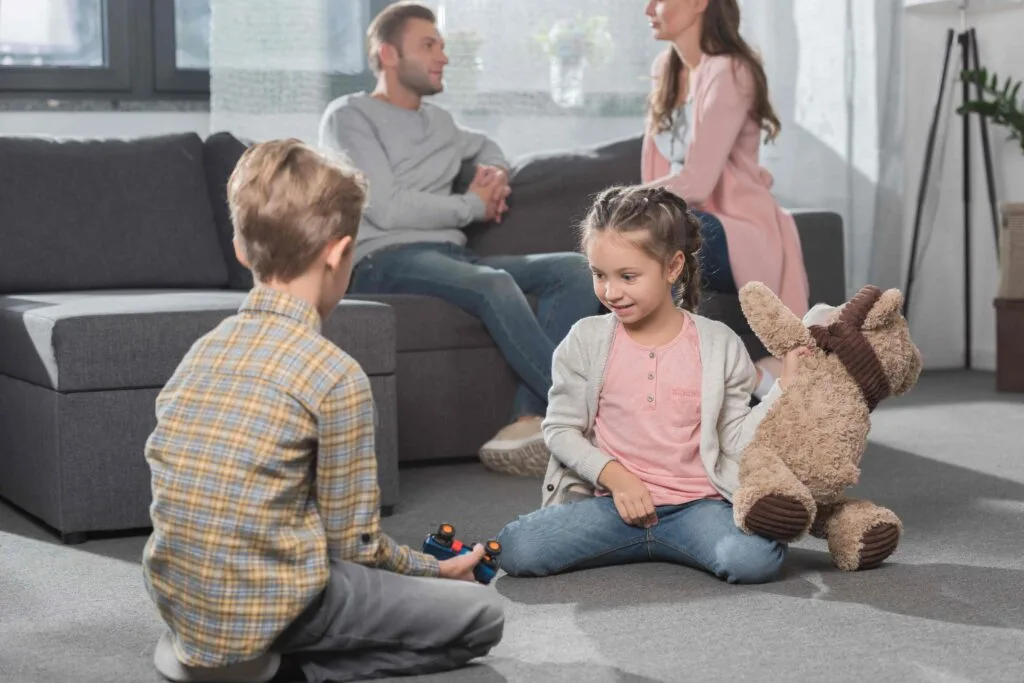
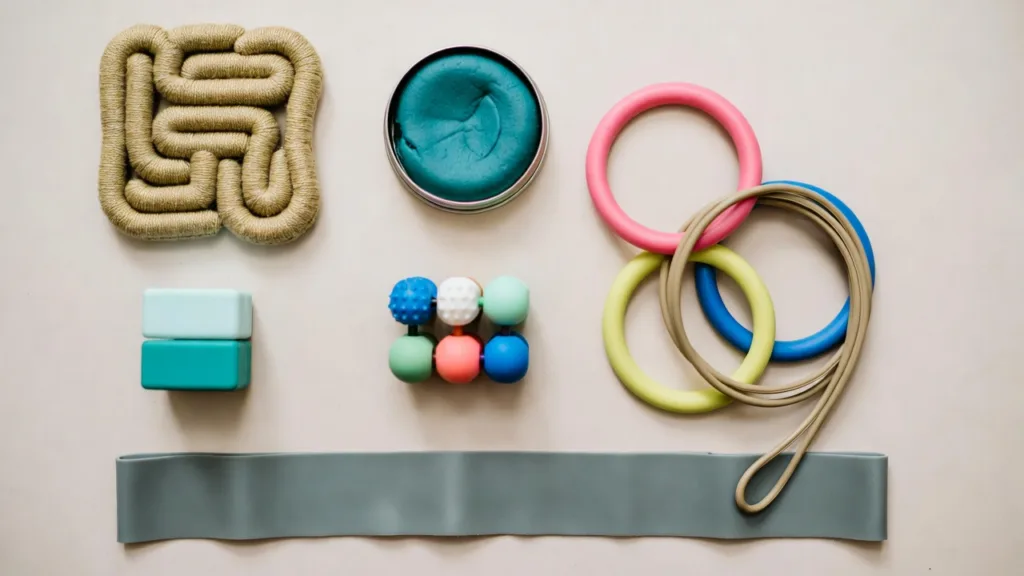
The best fidget toys for kids with ADHD are not the loudest or the flashiest. They are the ones that quiet the body enough for the mind to focus.
Fidget toys are one slice of the sensory toolkit. Our sensory tools for autism guide shows how to choose across categories.
Best Fidget Toys for Kids with ADHD and Sensory Processing Disorder (What Actually Helps Focus)
When my daughter’s teacher first suggested a fidget toy in class, I was skeptical. Wouldn’t it be more distracting? Three years and about 40 fidgets later, I can tell you: the right fidget is transformative. The wrong one is chaos.
Quick answer: The best fidget toys for ADHD and sensory processing disorder are small, quiet, and designed for discreet use during focused tasks. The goal is not entertainment but regulated arousal: giving the sensory-seeking brain just enough input to settle into focus without distraction.
Here’s what I’ve learned about finding the right one for your child.
Why Do Fidget Toys Help Kids with ADHD and SPD?
For many kids with ADHD or Sensory Processing Disorder, the brain needs a certain level of input to stay focused. When a child is tapping their foot, chewing their pencil, or squirming in their chair, they’re not being bad. They’re self-regulating. A fidget toy gives the hands something constructive to do so the brain can focus on the task at hand. Creating Calm covers the room the fidget gets used in, which decides whether it settles your child or becomes another distraction.
The key is finding a fidget that provides enough sensory input to satisfy the need without demanding visual attention.
What Makes a Good Fidget Toy?
- Can be used without looking at it
- Silent or very quiet (school-appropriate)
- Durable enough to withstand continuous use
- Matched to your child’s specific sensory needs
Top Fidget Toys by Sensory Type
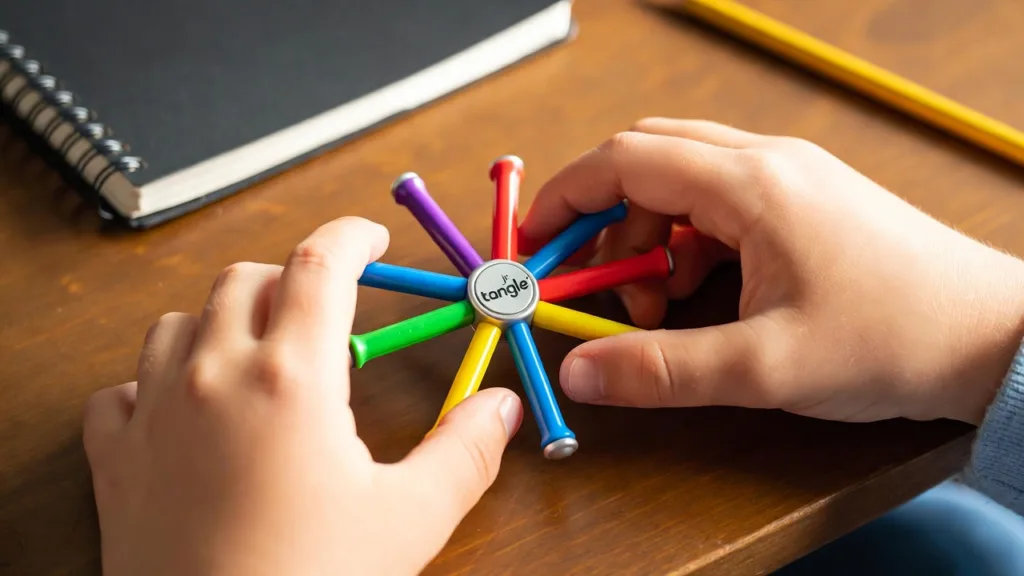
For Tactile Seekers (loves textures)
- Tangle Jr., a jointed twist toy that can be bent and reshaped silently
- Bumpy sensory rings, worn on a finger, provides constant texture feedback
- Kinetic sand in a small sealed container for desk use
For Proprioceptive Seekers (needs pressure/resistance)
- Therapy putty, different resistance levels from soft to firm
- Stress balls (get the non-squeaky kind for classrooms)
- Resistance bands tied to chair legs. Children can push against them with their feet
For Auditory Seekers (needs sound input)
- Click-top pens (classic but effective)
- Quiet fidget cubes with clicker and switch features
- Note: Reserve louder fidgets for home use only
For Visual Seekers (drawn to movement)
- Liquid motion bubblers, for home calm-down time
- Small spinning tops, use at a designated calm corner
- Avoid visual fidgets in classroom settings as they draw other kids’ attention
How to Introduce a Fidget Toy
- Let your child choose it, buy-in matters
- Practice using it at home first before sending it to school
- Set expectations: the fidget stays in the hand or desk, not flying across the room
- Talk to the teacher, frame it as a self-regulation tool, not a toy
Creating Calm: Designing a Soothing Home Environment for Special Needs
Sources and further reading
- CHADD’s (Children and Adults with ADHD) guidance on sensory processing and ADHD
- Child Mind Institute’s research on fidget tools and ADHD
A Note on the Fidget Spinner Craze
Fidget spinners went viral as ‘ADHD tools’ a few years ago. The problem? They require visual attention to use. Most occupational therapists don’t recommend them as classroom tools for exactly this reason. Use them at home if your child loves them, just don’t expect them to improve focus during a lesson.
Final Thought
The best fidget toy is the one your child reaches for, the one that keeps their hands busy enough for their brain to do its job. Trust your child’s signals. They know their body better than any list does.
Why Fidgeting Actually Helps Focus in ADHD
The research on fidgeting and ADHD has shifted significantly in recent years. According to CHADD’s (Children and Adults with ADHD) guidance on sensory processing and ADHD, many children with ADHD and sensory processing differences actually improve their concentration when given a low-level sensory task to engage their body while their mind focuses on something else. This is not distraction. It is regulated arousal. The brain that has a small amount of tactile input to process is often better able to sustain attention on a cognitive task than the brain that is trying to manage boredom-based distractibility on its own.
The Child Mind Institute’s research on fidget tools and ADHD notes that the effectiveness of any fidget toy depends on whether it provides the right level of sensory input without becoming distracting in itself. A fidget spinner that draws the child’s visual attention is more distraction than regulation. A smooth worry stone, a textured silicone band on the wrist, or a chewable necklace that can be used discreetly provides sensory input without commanding attention. The best fidget tools are the ones that disappear into the background while doing their job. More on creating the full sensory environment that supports focus is worth exploring alongside this guide.
If you want more of this kind of honest, practical guidance, Crafting Connections goes deeper into using tools and activities to support your ADHD or sensory-sensitive child in social and learning settings.
How to choose the best fidget toys for kids with ADHD
Look for something repetitive, quiet, and durable. If it distracts the class or breaks in a week, it is the wrong tool.
Frequently Asked Questions
Are fidget toys actually backed by research?
The research is mixed and growing. Some controlled studies show modest benefits for attention and focus in children with ADHD when using appropriate fidget tools. Others show neutral or context-dependent effects. The strongest evidence is for tools that provide proprioceptive input without visual engagement, such as textured objects, chewable tools, and resistance bands.
Will the school allow my child to use a fidget tool?
Many schools do if the tool is appropriate and does not distract other students. A physician’s note or OT recommendation helps make the case. Include fidget tool access in your child’s 504 Plan or IEP accommodations for formal protection. Start with discreet tools like silicone wristbands, textured velcro strips under the desk, or chewable jewelry to reduce the likelihood of pushback.
What is the difference between a sensory fidget and a sensory toy?
A fidget is designed for discreet use during other activities to support regulation without drawing attention. A sensory toy is designed for dedicated sensory play time and may provide more intense input. Both have their place. Fidgets for school or homework time should be chosen for their discretion. Sensory toys for regulated play time can be richer in input.
How many fidget toys does my child actually need?
Two to three that work reliably is more valuable than a drawer full of options. Novelty wears off quickly. Have a reliable rotation of three to four tools and introduce new ones occasionally to maintain interest. Let your child indicate which tools they reach for voluntarily during focus tasks. Those are the ones that are actually working.
Should I work with an OT to choose fidget tools for my child?
Yes if you have access to OT. An occupational therapist can conduct a sensory evaluation and recommend tools matched to your child’s specific sensory processing profile, which is more accurate than trial-and-error purchasing. If OT access is limited, observe your child carefully for sensory-seeking patterns and trial tools that address those specific channels.
My child chews on clothing and pencils. What fidget toy addresses that?
Oral-motor seeking (chewing) is extremely common in children with ADHD and SPD. Chewable jewelry, specifically designed food-grade silicone necklaces or bracelets intended for chewing, is the most effective redirection. They are discreet, durable, washable, and specifically designed for safe oral use. Look for ARK Therapeutic, Chewigem, or similar established brands with safety testing documentation.
Building a Fidget-Friendly Home and School Environment
Beyond individual tools, consider building fidget access into your child’s environment as a default rather than a special accommodation. A small basket of approved fidget options at the homework spot means your child does not have to ask permission or remember to retrieve a tool when their focus starts to slip. A chewable pendant worn daily means oral-motor seeking is always redirected appropriately before it becomes a problem.
Talk to your child, when developmentally appropriate, about their own fidget preferences. Many children with ADHD are highly self-aware about what helps their focus and what does not. Letting them participate in selecting their own regulation tools builds self-advocacy skills that serve them far beyond childhood. They need to be able to tell a teacher, a future employer, or a partner: “I concentrate better when I can move my hands. Here is how that looks.”
The goal is not just finding a toy that works today. It is building the foundation for a person who understands their own neurology, advocates for what they need, and has practical tools that fit their adult life as naturally as they fit their childhood one. Start now. The investment is worth it.
The communication strategies you build with your child now, including conversations about what helps them focus, form the basis for the self-advocacy they will need for the rest of their lives.
Start where you are. Try one tool. Watch what happens. That simple observation practice is both the beginning of finding what works and the beginning of teaching your child to notice what works for them. That skill, the skill of noticing and responding to your own nervous system with the tools you need, is one of the most valuable things you can help your ADHD or SPD child develop.
The best fidget toy is not the one on any list. It is the one your child actually uses when they need it. Build toward that. Everything else is just discovering the path.