
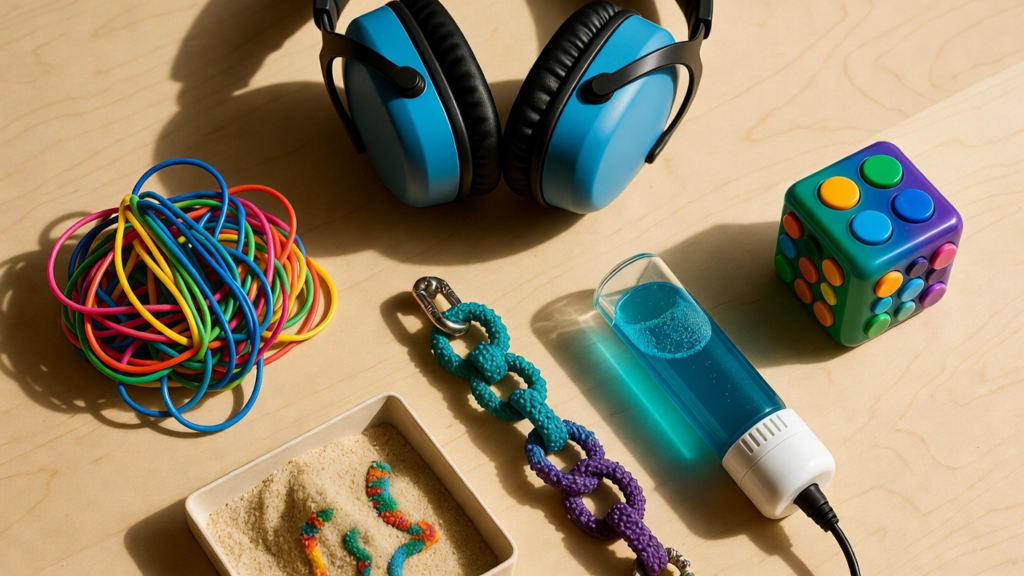
I have spent an embarrassing amount of money on toys that promised to help my son regulate his sensory system. Some ended up under the couch. A few became absolute obsessions. This list? Only the ones that survived our house.
Whether your child is a sensory seeker who craves input or a sensory avoider who gets overwhelmed easily, there’s something here for you.
What Makes a Toy ‘Sensory-Friendly’?
A sensory toy isn’t just any toy. It’s designed to provide specific types of input to help a child’s nervous system self-regulate. For kids with Autism Spectrum Disorder (ASD) or Sensory Processing Disorder (SPD), the right sensory input can mean the difference between a meltdown and a calm afternoon.
Best Sensory Toys for Sensory Seekers
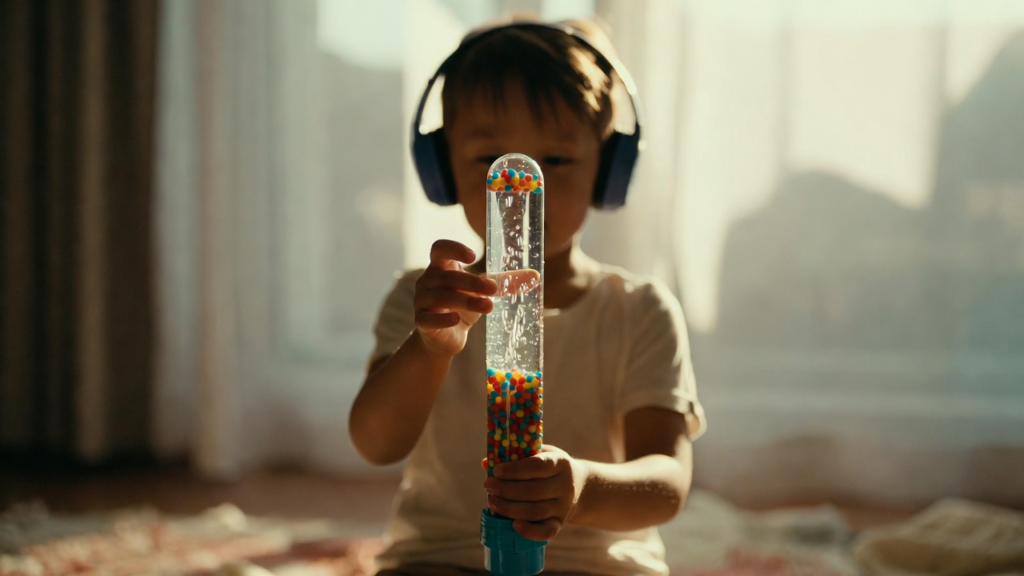
Sensory seekers need MORE input — they crave movement, pressure, and texture.
1. Weighted Lap Pads
A portable way to give that deep-pressure input kids crave. My son uses his during homework time and at restaurants. It’s a game-changer for keeping him grounded without drawing attention.
2. Liquid Motion Bubblers
These mesmerizing tubes of colored liquid were the first thing that ever gave my son a 5-minute break from stimming. They’re visually calming and work for seekers and avoiders alike.
3. Chew Necklaces (Chewelry)
If your child chews everything — shirts, pencils, fingers — a food-grade silicone chew necklace is safer and more socially acceptable. Look for ones rated for the level of chewing your child does (light, moderate, or heavy).
4. Therapy Swing (Indoor)
Nothing regulates my son faster than swinging. A simple indoor therapy swing installed in a doorframe gives him vestibular input — the kind that calms the nervous system almost immediately.
Best Sensory Toys for Sensory Avoiders
Avoiders are easily overwhelmed and need toys that offer gentle, controlled sensory input.
5. Kinetic Sand
Unlike regular sand, kinetic sand doesn’t stick to hands. It provides tactile input without the chaos. Start with a small amount and let your child approach it on their terms.
6. Noise-Canceling Headphones
Technically not a ‘toy,’ but the single most impactful sensory tool in our house. We don’t go anywhere without them — grocery stores, airports, family gatherings.
7. Fidget Cubes
Six sides, six different ways to fidget. Clicking, sliding, rolling — perfect for kids who need to keep their hands busy to stay focused. Great for school too.
Tips Before You Buy
- Always consider your child’s specific sensory profile — seeker vs. avoider
- Start small and introduce one new toy at a time
- Let your child lead — if they avoid it, don’t force it
- Talk to your occupational therapist before making big purchases
One Last Thing From One Mom to Another
The ‘best’ sensory toy is the one your child actually uses. Don’t feel pressured to buy every trending product. Trust what you know about your kid, watch how they play, and let that guide you.