
Why autism and eating disorders are connected
Autism affects how the brain processes sensory information, regulates emotions, and navigates social situations. All three of these areas directly influence how a person relates to food. Sensory sensitivities are one of the most common contributors. Many autistic individuals experience textures, smells, temperatures, and visual appearances of food as intensely aversive. What looks like “picky eating” to a parent may be genuine sensory distress. Demand avoidance patterns, interoception differences, and the rigid thinking that can accompany autism all create additional layers of risk. An autistic child who cannot reliably identify internal hunger and fullness cues, for example, may either overeat or undereat without being aware of it. Social and communication challenges add another dimension. Shared meals carry enormous social weight. For an autistic teenager who already finds social situations exhausting, food becomes entangled with anxiety, masking, and performance.What does ARFID look like in an autistic child?
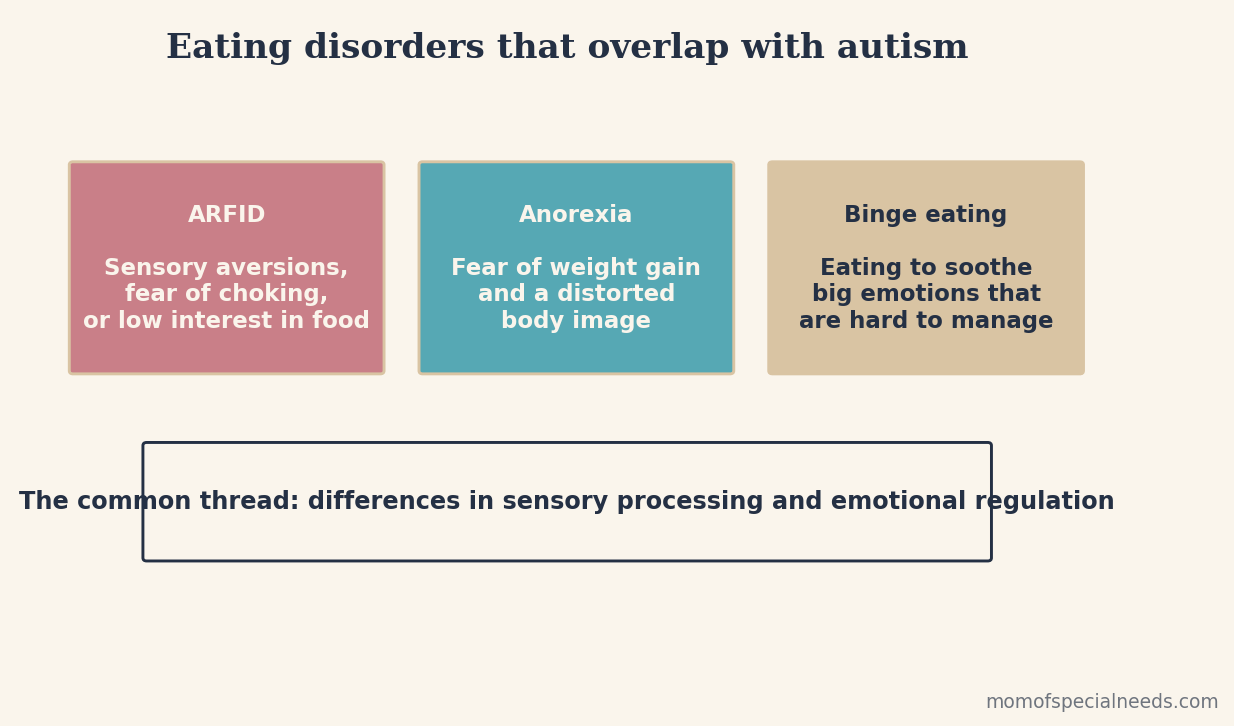
Avoidant Restrictive Food Intake Disorder (ARFID) is the eating disorder most commonly associated with autism. It is not about body image. It is about a fear of choking or vomiting, sensory aversion to specific food properties, or a general lack of interest in eating. Signs that may indicate ARFID in an autistic child include: eating fewer than 20 foods consistently, refusing entire food groups based on texture or smell, significant anxiety around mealtimes, weight loss or nutritional deficiencies, and distress when expected foods are unavailable. ARFID is distinct from anorexia nervosa, though both can co-occur with autism. The key difference is that ARFID is not driven by weight or body image concerns.The anorexia and autism overlap: what the research says
ARFID and anorexia can look similar from the outside, but they come from very different places. Here is how they differ.
| ARFID | Anorexia nervosa | |
|---|---|---|
| What drives it | Sensory aversions to texture, taste, smell, or look, fear of choking or vomiting, or low interest in food | An intense fear of gaining weight and a distorted body image |
| Body image | Not about body image or weight, many children actually want to grow and gain | Body image distortion is the core feature, seeing themselves as bigger than they are |
| What you might see | A shrinking list of safe foods, gagging at textures, avoiding whole food groups, very slow eating | Calorie counting, skipping meals, preoccupation with weight, shape, and dieting |
| Link to autism | Common in autistic children, often tied to sensory sensitivities | Also more common in autistic girls, and easy to miss or misread |
| Treatment focus | Gradual, sensory-aware food exposure, often with an OT and a dietitian | Restoring weight and addressing body image, with eating disorder specialists |
The two can overlap, sometimes called ARFID plus. Either way, a professional assessment is what sorts it out.
Studies have found that autistic traits are significantly elevated in individuals with anorexia nervosa. Research from the Autism Research Centre at Cambridge suggests that the overlap between autism and anorexia includes shared cognitive styles: detail-focused thinking, strong need for sameness and control, and difficulties with cognitive flexibility. For autistic adolescents, especially girls who have been masking for years, anorexia can develop as a way to establish control in an environment that feels unpredictable, or as a way to manage overwhelming sensory and emotional experiences. The dietary restriction provides structure and reduces the number of sensory decisions required each day. Medical Maze Decoded covers how to find and fund a clinician who works with autistic patients, which narrows the list fast.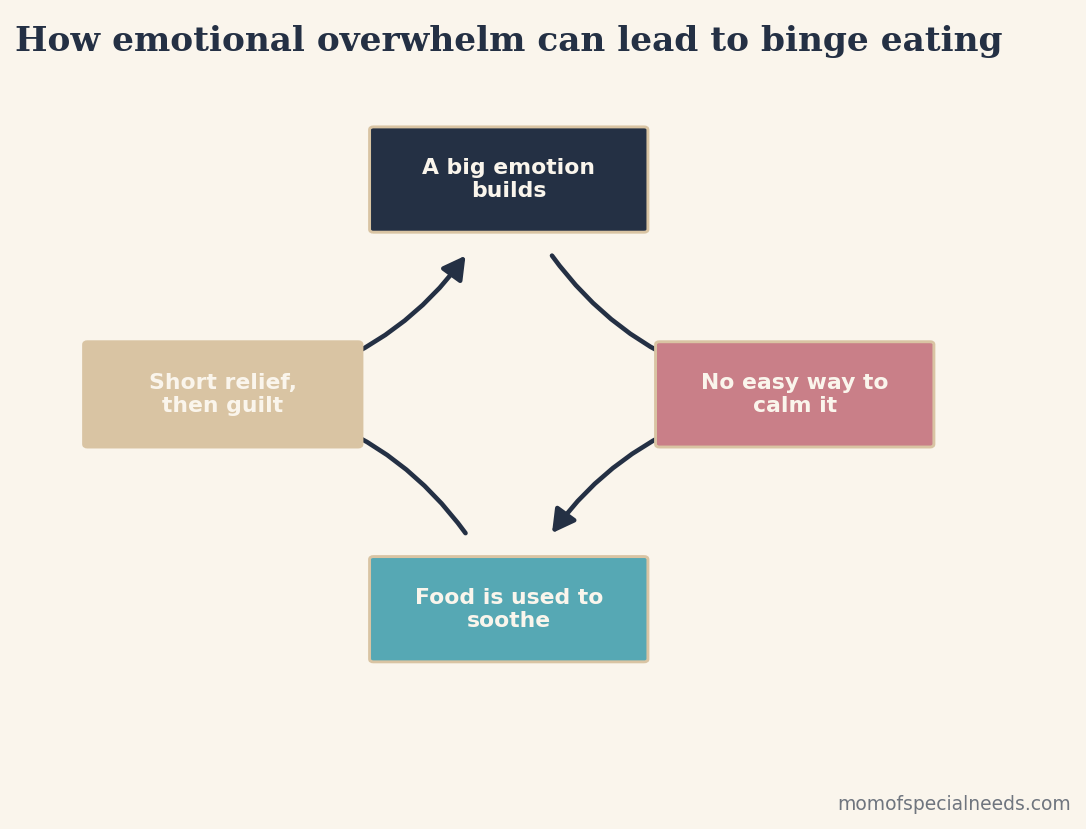
Binge eating and emotional dysregulation in autism
Binge eating disorder is less discussed in the autism context but equally important. Autistic individuals who experience emotional dysregulation, alexithymia (difficulty identifying emotions), or who use food as a sensory regulation strategy may be at higher risk for binge eating patterns. Food can function as a reliable sensory input in a world that often feels unpredictable. The taste, texture, and temperature of specific foods may provide genuine regulation benefit, which is different from emotional eating as it is typically described in non-autistic populations. Recognizing this distinction matters because treatment approaches need to be different. Approaches that focus purely on willpower or emotional triggers without addressing sensory and interoceptive differences will not be effective for autistic individuals.Warning signs parents often miss
Many warning signs of eating disorders in autistic children overlap with traits that parents and professionals attribute to autism itself. This creates significant delays in diagnosis and intervention. Warning signs that are often missed or misattributed include: extreme rigidity around specific foods being prepared in exact ways, significant weight changes that are explained away as growth, withdrawal from any social situation involving food, hypervigilance about food ingredients or nutrition labels that escalates over time, and distress about eating in public that becomes generalized avoidance. The challenge is that some of these behaviors may be longstanding autism-related patterns. The question to ask is whether the behavior is intensifying, expanding to new contexts, or beginning to interfere with the child’s health and functioning.What treatment actually looks like for autistic people with eating disorders
Standard eating disorder treatment protocols were developed primarily for non-autistic populations. They often rely heavily on verbal processing, group settings, exposure-based approaches, and flexible thinking. All of these can be significant barriers for autistic individuals. Effective treatment for autistic people with eating disorders typically involves providers who understand both autism and eating disorders, communication accommodations such as written materials and predictable session formats, sensory-informed meal support rather than rigid meal plans, and involvement of the family as active participants rather than bystanders. Research from the National Eating Disorders Association notes that treatment modifications for autistic individuals improve outcomes. Finding a therapist with dual specialization is difficult but essential. If you are not sure where to start, ask your child’s developmental pediatrician or psychiatrist for a referral to an eating disorder program that explicitly lists autism as a population they serve.How to support your autistic child around food without making things worse
If your child is showing signs of disordered eating, the instinct to push harder on food is understandable but often counterproductive. Pressure around eating increases anxiety, which increases avoidance. What tends to help more: reducing the social pressure of mealtimes, giving your child predictability about what will be served, creating a sensory-supported eating environment, and working with an occupational therapist who specializes in feeding if sensory issues are the primary driver. For body image concerns, the most protective thing a parent can do is model neutral body talk, avoid commenting on body size or food choices in a moralizing way, and validate that your child’s body is doing its best.Finding the right professional help
A diagnosis of an eating disorder in an autistic child or adolescent should involve at minimum: a pediatrician or physician to assess physical health and nutritional status, a psychologist or therapist with eating disorder training, and ideally an occupational therapist with feeding experience. If your child is at medical risk, inpatient or residential treatment may be necessary. When evaluating programs, ask specifically whether they have experience with autistic patients, whether they offer sensory accommodations, and whether their communication approach is adapted for autistic individuals. The NEDA helpline can help you find local resources. You can also search the Psychology Today directory for therapists who list both autism and eating disorders as specialties.
Finding someone who understands both
Medical Maze Decoded: Beat the Healthcare System for Your Special Needs Child
Most eating disorder services are not built for autistic patients, and most autism services do not treat eating disorders. Medical Maze Decoded is the guide to finding the right clinician, getting the referral approved and funding it.
Get Medical Maze Decoded $29.99Sources and further reading
Frequently asked questions
Can autism cause an eating disorder?
The autism eating disorder connection does not mean autism directly causes eating disorders, but the neurological and sensory differences associated with autism significantly increase the risk. Sensory processing, interoception differences, emotional regulation challenges, and cognitive rigidity all create vulnerabilities that can lead to disordered eating patterns.Is ARFID the same as autism picky eating?
ARFID is a clinical diagnosis that goes beyond typical selective eating. Not all autistic children with sensory food preferences meet the criteria for ARFID. ARFID is diagnosed when the restricted eating causes significant nutritional deficiency, weight loss, dependence on supplements, or marked interference with daily functioning.At what age do eating disorders usually appear in autistic children?
Eating disorders in autistic individuals can emerge at any age but often become more visible in adolescence, particularly when social pressures around food and body image intensify. ARFID may be evident from early childhood, while anorexia and binge eating disorder are more common in the teenage years.Does my autistic child need inpatient treatment for an eating disorder?
Inpatient treatment is necessary when a child’s physical health is at risk, such as when there is significant weight loss, malnutrition, or medical instability. Many autistic children can be treated in outpatient settings if the eating disorder is identified early and the treatment team has appropriate autism expertise.How do I talk to my autistic child about eating disorder treatment?
Be concrete, predictable, and low-pressure. Explain what treatment involves in specific terms. Give your child as much choice and control as possible within the structure of treatment. Avoid framing food as a reward or punishment during this period.What to remember
The connection between autism and eating disorders is real, underdiagnosed, and treatable. If your child’s relationship with food is causing physical or emotional harm, that is worth taking seriously, regardless of whether it fits neatly into a category. You are not overreacting. You are paying attention, and that is what your child needs most right now. If you want more support navigating the overlap between autism and health, the MoSN newsletter sends one honest email a week, no fluff. Subscribe and join tens of thousands of parents who are figuring this out alongside you.Next step
Medical Maze Decoded: Beat the Healthcare System for Your Special Needs Child
Knowing what you are looking at is step one. Finding someone qualified to treat it is the hard part. Medical Maze Decoded is the guide to that search.
Get Medical Maze Decoded $29.99