
How to Take a Family Vacation with a Child with Autism (That Everyone Actually Enjoys)
Our first family vacation after my son’s diagnosis was three days of meltdowns, one cancelled excursion, and me crying in a hotel bathtub on night two. Our last trip? He called it ‘the best day of his life.’ The difference was preparation — and knowing what we were actually dealing with.
Why Vacations Are Hard for Kids with Autism
Vacations break every routine. New environments, unfamiliar sounds and smells, unpredictable schedules, airport sensory overload, different food, different beds. For a child whose nervous system craves predictability, this is a perfect storm.
The goal isn’t to avoid the disruption entirely — it’s to build a structure within the chaos so your child can cope.
Before You Go: The Preparation Phase
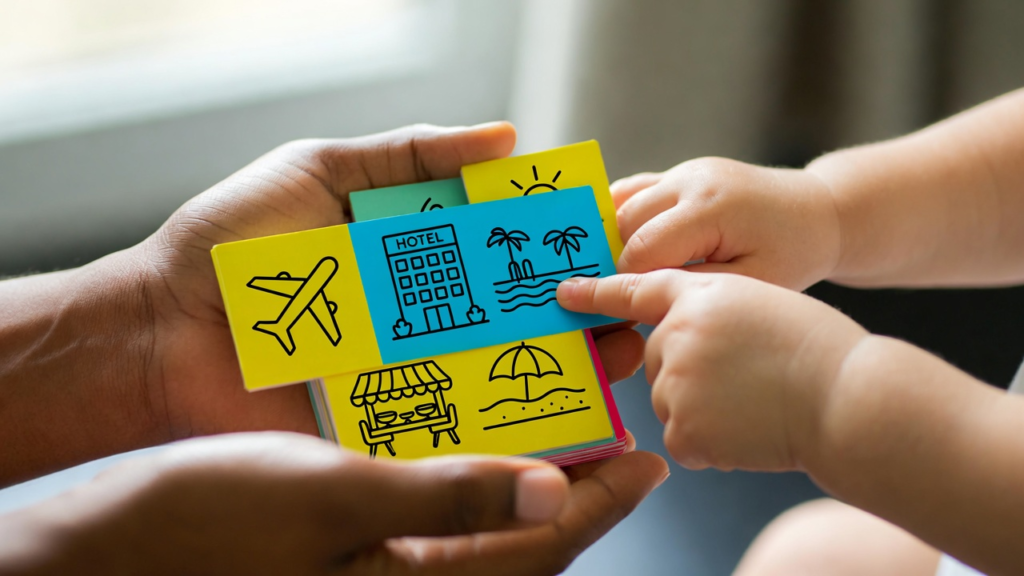
Create a Visual Schedule for the Trip
Use pictures or icons to show the sequence of events: plane, hotel, pool, restaurant. Review it daily for 1-2 weeks before travel. Predictability reduces anxiety — even for an unfamiliar event.
Watch Videos of the Destination
YouTube is your best friend. Find videos of the actual hotel room type, the airport you’ll be flying through, the theme park or beach. Familiarity before arrival significantly reduces first-day anxiety.
Pack Their Sensory Kit
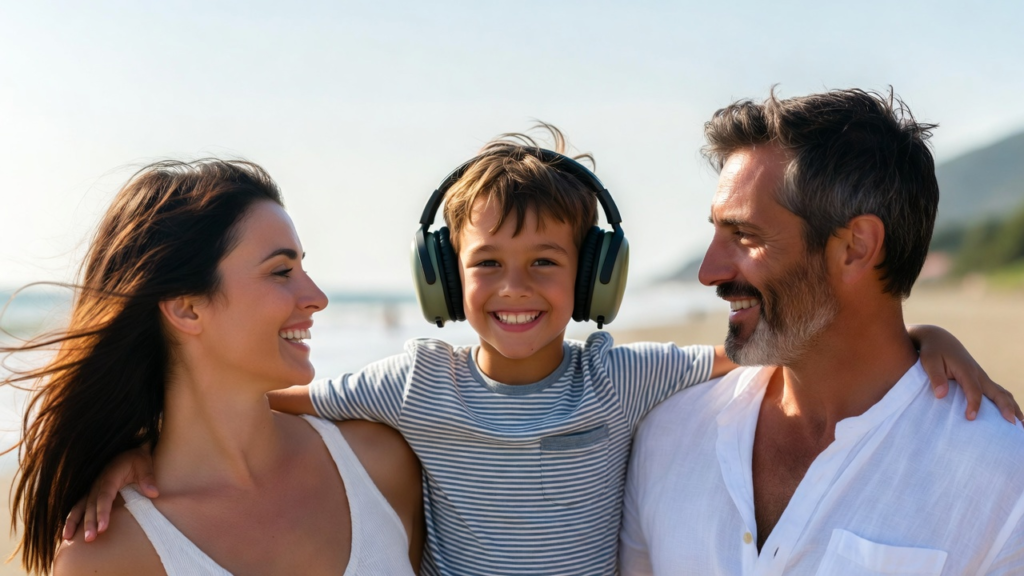
This is non-negotiable. Noise-canceling headphones, a weighted lap pad, their comfort item, preferred snacks, a fidget. The sensory kit goes in your carry-on, not checked luggage.
Choosing the Right Destination
- Look for Certified Autism Center (CAC) destinations — theme parks, resorts, and attractions with trained staff and sensory accommodations
- Consider destinations with flexibility — beaches, state parks, and nature-based trips allow for unstructured time and quiet retreats
- Avoid destinations with rigid schedules and loud, unpredictable environments for first trips
- Private rentals (VRBO, Airbnb) over hotels can be lifesavers — your own kitchen, familiar routine, no shared spaces
At the Airport: The Survival Strategy
- Arrive early — rushing is catastrophic
- Request a TSA Cares assistance pass ahead of time (call 72 hours before your flight)
- Ask airlines about pre-boarding for passengers with disabilities
- Bring familiar snacks and entertainment for every segment of the journey
- Headphones ON before entering any loud space
At Theme Parks and Attractions
Most major theme parks now offer disability access programs. At Disney, it’s the Disability Access Service (DAS). At Universal, it’s the Attraction Assistance Pass. These allow your family to return at a designated time instead of waiting in long, overwhelming queues.
Call ahead or visit guest services immediately upon arrival. Do not wait until you’re already overwhelmed to ask.
Give Yourself Permission to Do Less
You may not see everything. You may leave early. You may spend one entire afternoon at the hotel pool because your child is finally calm and happy. That counts. That is a win.
“We went to Disney for four days and only did eight rides total. My son’s favorite part was a fountain near Main Street that he stood at for 30 minutes. I almost didn’t let him stay that long. I’m so glad I did.” — A Mom in Our Community
After the Trip: The Re-Entry Plan
Coming home can be just as hard as leaving. Budget at least one full low-key day after returning before any school or therapy commitments. Let your child decompress. Let yourself decompress. Then celebrate — because you did something hard and beautiful together.