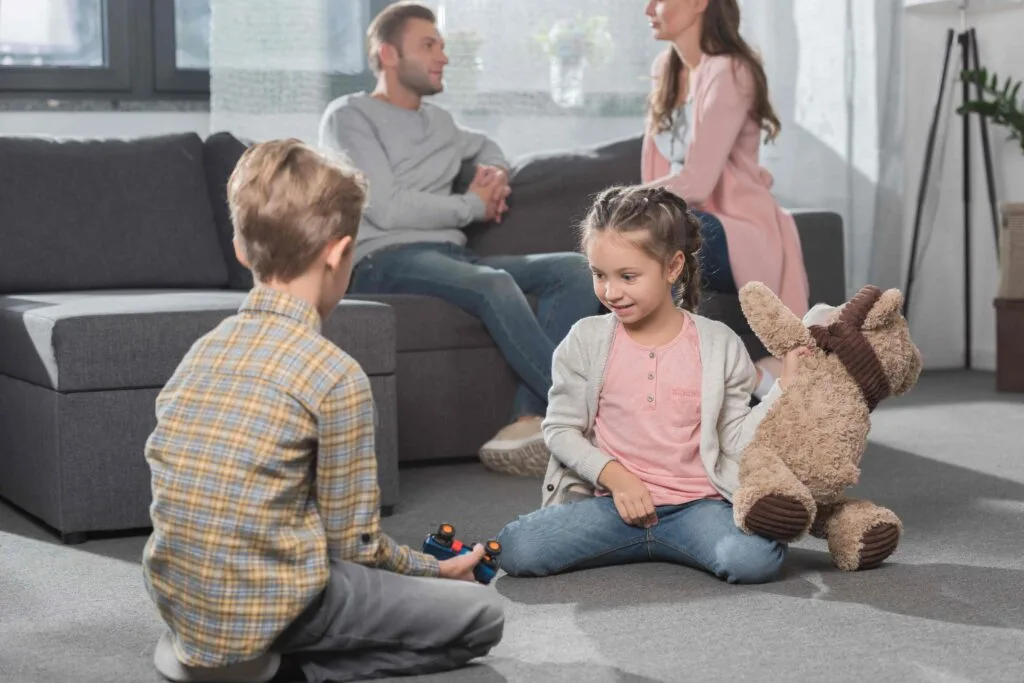
PDA in autistic children is not defiance. It is an anxiety-driven need to feel in control when demands pile up.
AI SUMMARY
This guide explains Pathological Demand Avoidance (PDA), a profile within the autism spectrum where children experience extreme, anxiety-driven resistance to everyday demands, even ones they want to meet. It covers why standard autism parenting often makes PDA worse, what low-demand parenting actually means in practice (and what it does not), and how United States families can get PDA-informed school accommodations even though PDA is not in the DSM. Written for parents of autistic children who have tried every typical strategy and are still hitting a wall.
DEFINITION
Pathological Demand Avoidance (PDA) is a profile within the autism spectrum that involves extreme, anxiety-driven resistance to everyday demands, even demands the child wants to meet. The UK-based PDA Society describes the central feature as a nervous system that perceives ordinary requests as threats to autonomy, which triggers a fight, flight, or freeze response. The PDA Society’s 2023 Lives Worth Living survey of 921 PDA community members found 87 percent of PDA children had experienced severe anxiety in the last year. The profile is not yet listed in the DSM-5 or ICD-11, but clinical recognition is growing in the United States.
What is Pathological Demand Avoidance and how is it different from typical autism?
Quick answer: PDA is an anxiety-driven profile within autism where the nervous system reads ordinary requests as threats to autonomy. Children with this profile often look socially fluent on the surface but show extreme resistance to everyday demands, rapid mood shifts, and a strong drive to control interactions.
British clinician Elizabeth Newson coined the term in 1983 and formally published it in 2003 in Archives of Disease in Childhood. The PDA Society, the only UK charity dedicated to this profile, considers PDA a recognized autism profile rather than a separate diagnosis. In the United States, PDA North America (founded March 2020) leads parallel education and advocacy work.
A small 2015 prevalence study by Gillberg and colleagues in the Faroe Islands suggested as much as one in five autistic individuals might meet the PDA profile, though the PDA Society notes that figure is based on the only published prevalence research available and needs replication. The differences from a typical autism presentation are specific. Where a standard autism profile may show predictable routines, narrow interests, and a clear preference for sameness, a PDA child can shift moods within minutes, role-play their way out of expectations, and resist tasks they earlier requested. The Child Mind Institute describes the pattern as anxiety- and inflexibility-driven avoidance that interferes with functioning at home or at school.
Why do standard parenting strategies fail PDA children and often make them worse?
Quick answer: Sticker charts, time-outs, first/then boards, ABA-style compliance work, and consequence-based discipline all add demand pressure to a nervous system that is already running hot. The more pressure you apply, the more the avoidance escalates. That is the central clinical observation across PDA-informed research.
Casey Ehrlich, PhD, social scientist and founder of At Peace Parents, described PDA on the I Have ADHD podcast in November 2025 as a survival-brain response where the amygdala flags a subconscious perception of lost autonomy as a life threat. When that perception fires, you cannot reason a child out of it, because the part of the brain that reasons is not online. Learning to Listen covers how a request is phrased and why that changes the answer, which is the whole game with PDA.
That is why families often report that the harder they push, the worse the meltdowns become. The PDA Society’s 2024 PDA in Our Words report, which analyzed the same 921 community responses, found that 91 percent of parents reported their PDA child had experienced severe anxiety at some point, and 72 percent said their child either could not tolerate school or was struggling to attend regularly. Compliance-based interventions are not neutral for PDA kids. They are an active stressor on a system already in overload.
Why does my autistic child refuse things they actually want to do?
Quick answer: The key word in Pathological Demand Avoidance is demand, not task. A direct request, a perceived expectation, even a self-imposed goal can register as a threat to autonomy. That is why a PDA child can beg to go to the park one minute and refuse to put on shoes the next.
The Baker Center For Children and Families describes PDA as a behavioral profile within autism characterized by extreme resistance to everyday demands, driven by an anxiety-based need to control. That is the most important thing a teacher or parent can understand: every avoidance behavior is anxiety in disguise. Even fun things become demands once they feel scheduled, expected, or directed at the child.
This is what trips up the most caring parents. You followed the child’s lead, planned the trip they asked for, and they still melted down at the door. That is the profile, not your parenting. A request from a parent (even an excited, loving one) carries a hierarchy. A schedule on the wall carries a hierarchy. The PDA nervous system reads both as control.
What is low-demand parenting and is it the same as having no boundaries?
Quick answer: Low-demand parenting reduces the demand load on a PDA child’s nervous system. It is not permissive parenting and it does not abandon limits. Safety boundaries, family values, and care for siblings all stay in place. What changes is how often, and how directly, you ask.
Autistic adult and parent coach Amanda Diekman, author of Low-Demand Parenting (2023) and host of the annual Low Demand Parenting Summit, frames the approach as active triage. Drop the demands that do not matter. Soften the ones that do. Preserve the few that are truly non-negotiable. The Neurodivergent Insights team led by Dr. Megan Anna Neff frames the same shift as reducing demands and offering choices that promote autonomy, with fewer commands and more invitations the child can opt into.
A useful test before any request: does this need to happen right now, in this exact form, from me? If the answer is no on any of those three, you have room to soften the demand without abandoning the goal.
What practical strategies actually work for a child with a PDA profile?
Quick answer: Declarative language, indirect requests, role play, humor, novelty, and child-controlled sensory tools are the strategies PDA-informed clinicians and coaches recommend most. The shared thread is that the child chooses, not the adult.
Declarative language is the most-cited example. Linda K. Murphy, speech-language pathologist and author of the Declarative Language Handbook, contrasts an imperative (Feed the dog) with a declarative observation (The dog looks hungry). Same goal. Different load on the nervous system. The declarative version invites without commanding.
A few other approaches PDA-informed sources consistently recommend:
- Offer choices the child controls (we could go now, or in 10 minutes, you tell me)
- Strew preferred items rather than scheduling them. Strewing leaves an offering nearby and lets the child opt in on their own
- Use role play to lower the social stakes. The dinosaur, not the parent, is asking
- Allow opt-outs without penalty
- Reduce eye contact and verbal pressure during transitions
Child-controlled sensory tools fit this same logic. A regulation tool the child can climb into when they decide is an offering, not a directive. The SensoryHarbor cuddle swing, rated to 440 pounds, is big enough for co-regulation with a parent or older sibling, which removes the hierarchical dynamic PDA kids resist. Browse the swing range at sensoryharbor.goaffpro.com and use code MOSN10 for a discount.
Learning to Listen: Effective Communication with Special Needs Children
Sources and further reading
- PDA Society
- Lives Worth Living survey of 921 PDA community members
- Archives of Disease in Childhood
- PDA North America
- Child Mind Institute
- Casey Ehrlich, PhD
- I Have ADHD podcast
- PDA in Our Words report
- Baker Center For Children and Families
- Amanda Diekman
- Neurodivergent Insights
- Linda K. Murphy
- rated to 440 pounds
- sensoryharbor.goaffpro.com
- Diane Gould, LCSW
- Stress-Free IEP podcast
- Undivided
- ADDitude’s 2026 reporting
- 2024 audit published in BJPsych Open
- Extreme Demand Avoidance Questionnaire (EDA-Q)
How can I get my PDA child supported at school when PDA is not formally recognized in the US?
Quick answer: PDA is not a qualifying category for an Individualized Education Program (IEP) or 504 Plan in the United States. The path is to qualify under an existing category, most often autism or other health impairment, and then write PDA-informed accommodations into the plan itself.
Diane Gould, LCSW, Founder and Executive Director of PDA North America, has emphasized in her work with families and in her 2026 conversation on the Stress-Free IEP podcast that an IEP should function as a guide for the adults supporting the child, with specific accommodations and strategies that work, rather than a list of compliance expectations placed on the child.
Practical accommodations to request include partial attendance, flexible exit passes, low-demand classroom environments, sensory regulation tools (see our guide on early signs of autism for context on sensory differences) available continuously (not on a schedule), and explicit guidance for staff to use declarative language. The advocacy nonprofit Undivided notes that you can add a written description of PDA, its triggers, and what works for your child directly into the accommodations section, even when the label itself is not formally diagnosed. The label is not what protects your child. The written accommodations are.
What is the mental health risk if I keep pushing my PDA child through standard expectations?
Quick answer: The risk is significant and well-documented. PDA children pushed through compliance-based approaches are at significantly higher risk of autistic burnout, anxiety disorders, and emotionally based school avoidance. The data is sobering across multiple surveys.
The PDA Society’s 2023 Lives Worth Living survey found 87 percent of PDA children and 82 percent of PDA adults had experienced severe anxiety in the past year. Per ADDitude’s 2026 reporting on a separate 2,000-person PDA North America survey, 88 percent of PDA children had experienced school avoidance or refusal at some point, and nearly 60 percent of PDA adults reported thoughts of suicide.
A 2024 audit published in BJPsych Open followed 20 autistic children who had been unable to attend school for at least three months. All 20 showed signs of autistic burnout, including chronic exhaustion, loss of previously held skills, and mood dysregulation. The same study found that 90 percent already had an Education Health Care Plan, meaning their needs were recognized on paper but not met in practice. Pushing a PDA-profile child through compliance-based expectations is one of the fastest documented routes into that pattern.
PDA-Informed vs Standard Approach
Side-by-side comparison of how standard autism strategies and PDA-informed strategies handle the same situations.
| Situation | Standard Autism Approach | PDA-Informed Approach |
|---|---|---|
| Morning routine | Visual schedule with first/then structure | Strew clothes nearby, narrate (the shoes are by the door), offer two times to leave |
| Resistance to a task | Repeat the demand, add a timer, follow with a consequence | Drop the demand, offer it as a choice later, switch to declarative language |
| School refusal | Push attendance, use rewards for going | Treat as nervous system overload, request partial attendance, work with school on a recovery plan |
| Meltdown | Hold a firm boundary, ride it out | Reduce verbal input, remove additional demands, co-regulate without contact if the child prefers |
| Sensory tools | Schedule sensory breaks | Make tools constantly available, let the child opt in |
How low-demand parenting helps PDA in autistic children
Lower the pressure, offer choices, and drop the battles that do not matter. The goal is safety, not compliance.
Frequently asked questions
Is PDA the same as Oppositional Defiant Disorder?
No. ODD is a behavior-based diagnosis driven by anger toward authority. PDA is anxiety-based and shows up across all relationships, including ones the child loves. The Baker Center For Children and Families calls PDA a behavioral profile within autism, not a behavior disorder. Treating PDA as ODD often makes the avoidance worse.
Can a child be diagnosed with PDA in the United States?
Not officially. PDA is not in the DSM-5 or ICD-11. A US clinician can identify a PDA profile alongside an autism diagnosis and note demand avoidance traits in clinical paperwork, but there is no standalone PDA diagnostic code. PDA North America maintains a directory of PDA-informed clinicians for families seeking assessment.
Does ABA therapy work for PDA children?
PDA-informed clinicians and the PDA Society consistently warn against compliance-based ABA for this profile. The reason is mechanistic. Compliance pressure is exactly the trigger PDA nervous systems are built to resist. PDA-affirming providers focus on autonomy, regulation, and trust instead of behavior shaping.
What is declarative language and can you give an example?
Declarative language describes or observes rather than directing. Imperative version: Put your coat on, we are leaving. Declarative version: It is cold outside today. Same information, no autonomy-loss trigger. Linda K. Murphy’s Declarative Language Handbook is the most-cited reference.
How do I know if my autistic child has a PDA profile?
The Extreme Demand Avoidance Questionnaire (EDA-Q), developed by Dr. Elizabeth O’Nions and colleagues at King’s College London in 2014, is the most-used screening tool. It is not a diagnosis but helps parents and clinicians decide whether further PDA-informed assessment is warranted. PDA North America and the PDA Society both link to it freely.
About the author
Rette V. | Special needs parenting writer
Rette V. writes for momofspecialneeds.com, a parenting resource for mothers raising children with special needs. The author covers autism, ADHD, sensory processing, and neurodivergent family life, with a focus on practical strategies for families who have run out of standard playbooks.