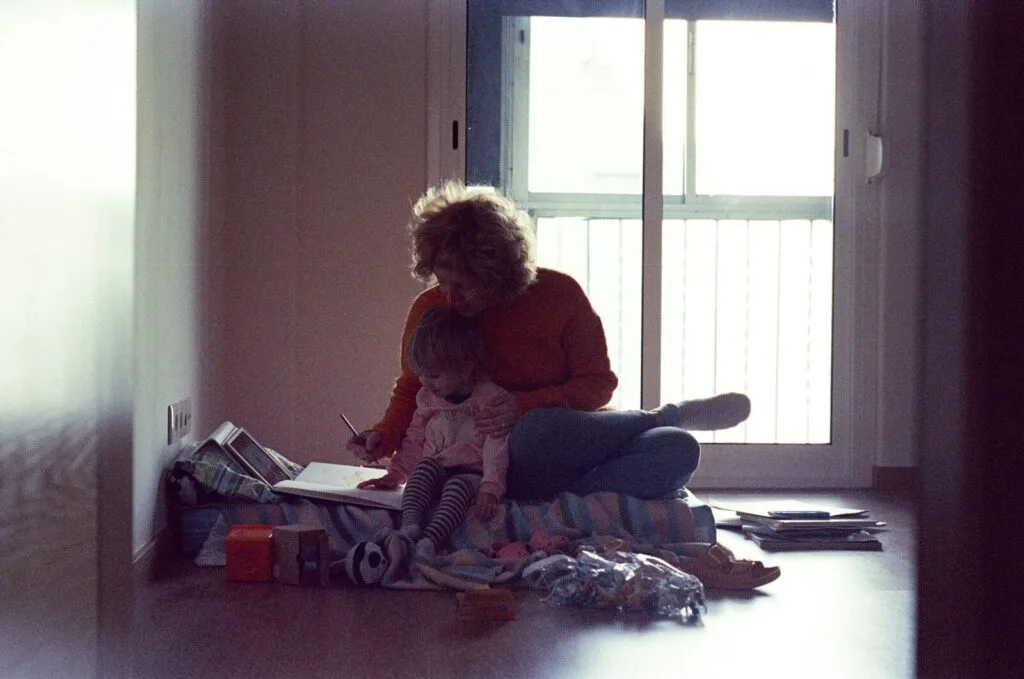
The autism evening decompression routine is a structured 60 to 90 minute wind-down that starts the moment your autistic child walks through the door. It uses sensory regulation, low-demand presence, and predictable food and movement to release the day’s masking. Done right, it cuts after-school meltdowns by half or more. Done wrong (questions, screens, errands, homework first), it triggers the after-school crash that ruins the rest of the night.
Quick stats first
- About 1 in 31 children in the US is identified with autism spectrum disorder (Source: CDC, 2025, based on 2022 data).
- Many autistic children mask self-regulation behaviors at school for 6 or more hours, leading to a documented phenomenon often called afterschool restraint collapse (concept attributed to parent educator Andrea Loewen Nair, widely cited in autism parenting literature).
- Proprioceptive and deep-pressure input has clinically observed regulating effects on the autistic nervous system (Source: pediatric occupational therapy practice patterns and AOTA position statements).
Why does my autistic child melt down right when they get home?
Because home is the first safe place they have been in 6 hours. The meltdown is not happening to you. It is happening because of you. You are the safe person they finally let it out around.
I did not understand this for years. My son was “fine all day,” according to the teacher. Then at 3:14 PM the school door opened, he walked to the car, and by 3:17 PM he was screaming about a shoe. By 3:42 PM I was crying too. I asked the OT what I was doing wrong. She looked at me and said, Nothing. He just held it together for 6 hours and you are the place he gets to fall apart. That is your privilege and your problem.
The technical name for this is post-school dysregulation or afterschool restraint collapse. Masking is exhausting. Sensory filtering is exhausting. Following neurotypical social rules is exhausting. By 3 PM the cup is full. By 3:15 PM it overflows. Your job is not to prevent the overflow. Your job is to give it somewhere safe to go. Creating Calm works on the house itself, which is what decides how much decompression your child needs in the first place.
If you have not read about the difference between this and a tantrum, the difference matters: autism meltdown vs tantrum.
What is the right autism evening decompression routine, step by step?
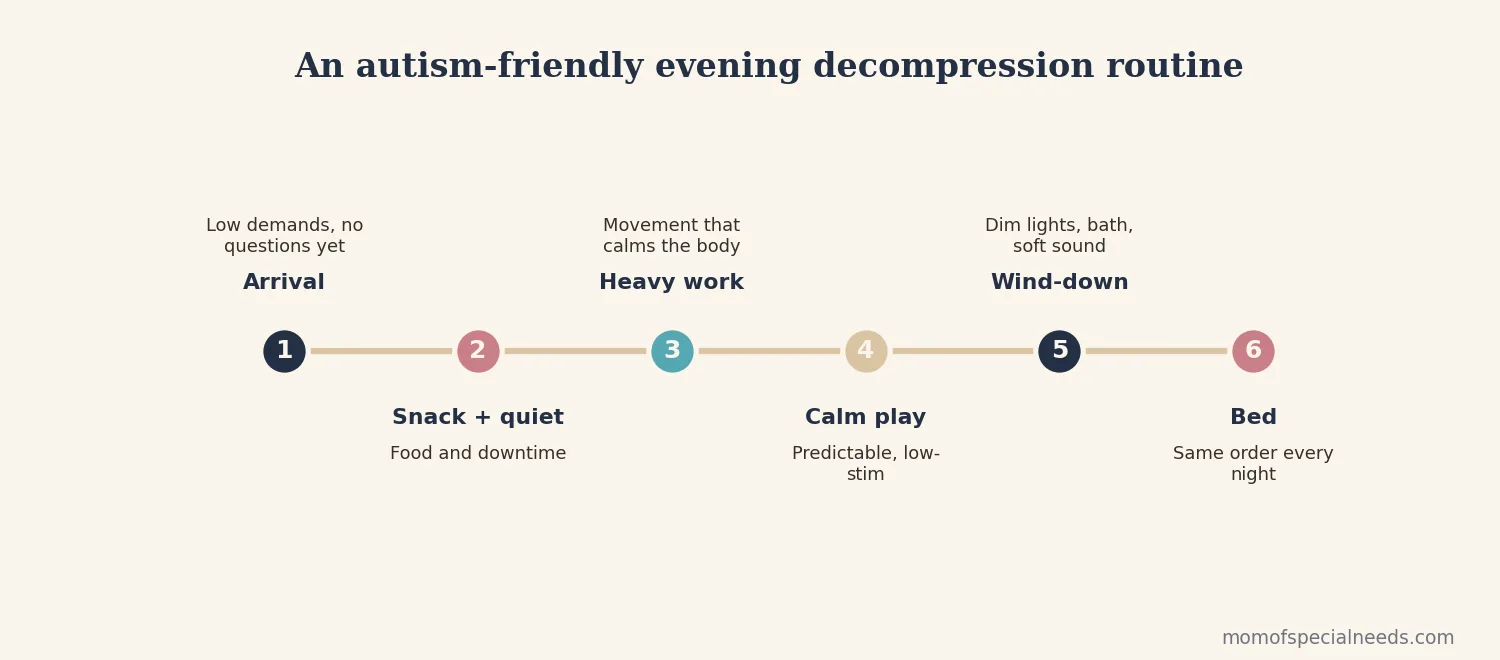
It is 60 to 90 minutes of structured low-demand transition designed to bring the nervous system down from school-mode. Skip the questions. Skip the homework talk. Skip the errands.
The decompression routine, in order:
- The car or doorway. First 5 minutes. No questions. No how was your day. Hand them a familiar snack and a water bottle. Music low. Lights soft if possible.
- Heavy work or deep pressure. Next 10 to 15 minutes. A weighted blanket, a 10-minute swing, a few sets of wall push-ups, jumping on a mini trampoline, pushing a heavy laundry basket. Proprioceptive input resets the nervous system fastest.
- Safe sensory space. Next 20 to 30 minutes. Their favorite low-stim spot. Their room, a tent, the couch with a hood up. Let them stim freely. No screen unless the screen is part of their regulation toolkit.
- A protein-and-fat snack. Not sugar. Not juice. Cheese, nuts, eggs, peanut butter on apple, yogurt. Blood sugar crashes worsen dysregulation.
- Low-demand presence from you. Sit nearby. Do not narrate. Do not ask. Just be in the room. Many kids will start talking when they are ready. That is the gold moment. Let it come to you.
- Homework, baths, chores. Only after the system has reset. Usually 60 to 90 minutes after walking in. Earlier than that and you are fighting biology.
You can read more about specific deep-pressure tools that work for evening routines in this comparison of deep pressure tools.
What sensory tools should I have ready for evening decompression?
The right tools are the ones your child already responds to. Adding new tools mid-meltdown rarely works. Build the kit during a calm Saturday morning.
The starter kit, ranked by how universally they help autistic kids regulate:
- Weighted blanket sized to body weight (typically 10% of body weight). Used during the safe sensory space window.
- Compression vest or tight shirt. Wearable deep pressure for kids who do not like blankets.
- Mini trampoline. 10 minutes of jumping is one of the fastest proprioceptive resets.
- Chewy or chew necklace. Oral motor input is calming for many autistic kids.
- Noise-reducing headphones. Critical if the home environment includes a TV, siblings, or street noise.
- Sensory swing. If you have the ceiling height. Vestibular input is regulating for most autistic kids.
- A specific stuffed animal or comfort object. Do not underestimate this one.
Occupational therapists explain the regulating role of proprioception and deep pressure in pediatric sensory regulation. how proprioception calms the nervous system.

Creating Calm: Designing a Soothing Home Environment for Special Needs
How do I handle siblings and dinner during decompression time?
This is the hardest part. The whole family has to bend around the autistic child’s evening reset for the first hour, and it can feel unfair to siblings. It is not forever. It is for now.
The four-part strategy that works for most families:
- Stagger arrivals if you can. Pick up the autistic child first or last. Avoid putting them in the car with siblings during the peak dysregulation window if possible.
- Give siblings a parallel decompression activity. Siblings of autistic kids often mask too (the “good one” role). They need a 30-minute decompression too. Snack, screen, alone-time in their room, a book.
- Push dinner later than school says. Many families eat at 5 PM because school says so. For autism families, 6 to 7 PM often works better because the system has reset.
- Build a quiet pre-dinner ritual. A short walk together. A shared show. Low-demand presence for everyone, not just the autistic child.
This is also a great topic to read more about because sibling care matters enormously: siblings of special needs kids.
If you want a deeper framework for evening regulation including the exact scripts for the 6 toughest moments of a school night, that is what lives in Boundless Love.
Frequently asked questions
How long should an autism evening decompression routine be?
Usually 60 to 90 minutes from the moment your child walks through the door. Some children need 2 hours. The routine ends when their body language shifts: shoulders drop, voice softens, eye contact returns, or they spontaneously start talking.
Can screen time be part of decompression?
For some kids yes, for some kids no. A familiar show in the safe sensory space is regulating for many autistic children. Fast-paced gaming, social media, or unfamiliar content usually is not. Test your specific child.
Why does my autistic child seem to need MORE input at the end of the day, not less?
This is sensory seeking. Some autistic kids regulate through high proprioceptive or vestibular input (jumping, spinning, crashing into pillows). That is healthy regulation. The more input is the input their nervous system needs to balance.
Is the after-school meltdown my fault?
No. The meltdown is the cost of 6 hours of masking. You are not causing it. You are the safe place where it can finally come out. That is not failure. That is what a safe person does.
Should I ask about their day during decompression?
Not at first. Questions feel like more input. Wait until they are settled, often 60 to 90 minutes after they walk in. They will often start sharing on their own. That is when you find out about the day.
What if homework is required during the decompression window?
Talk to the IEP team or 504 team about an after-school homework accommodation. Many autistic children do significantly better with homework done in the morning or after dinner. Get this in writing.
What to remember
The 4 PM hour will not always look like this. Right now it feels like the longest hour of your day, and it is. But once you stop fighting the biology, once you stop asking how was your day at 3:15 PM, once the routine becomes the routine, the system will surprise you. The kid who melted down every afternoon will one day walk in, eat the snack, do the deep pressure, and just start talking. That day is coming. Build the routine now so the day can find you ready.
If you want more like this delivered weekly, the MoSN newsletter sends one honest email per week. Subscribe to the free meltdown reset.